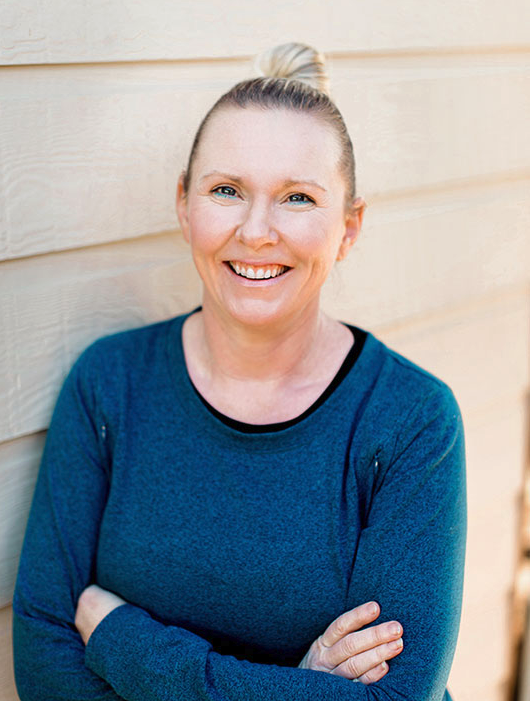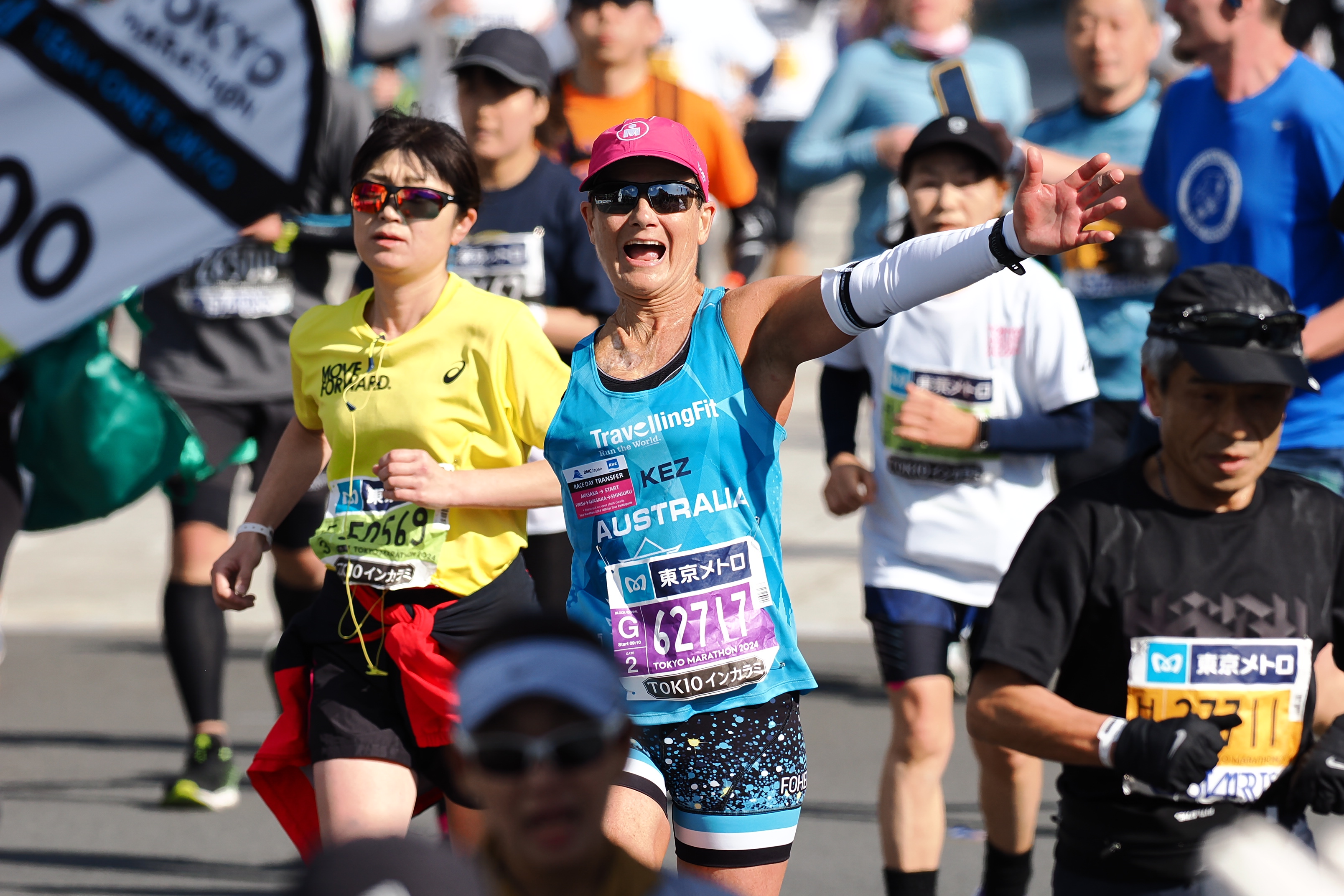
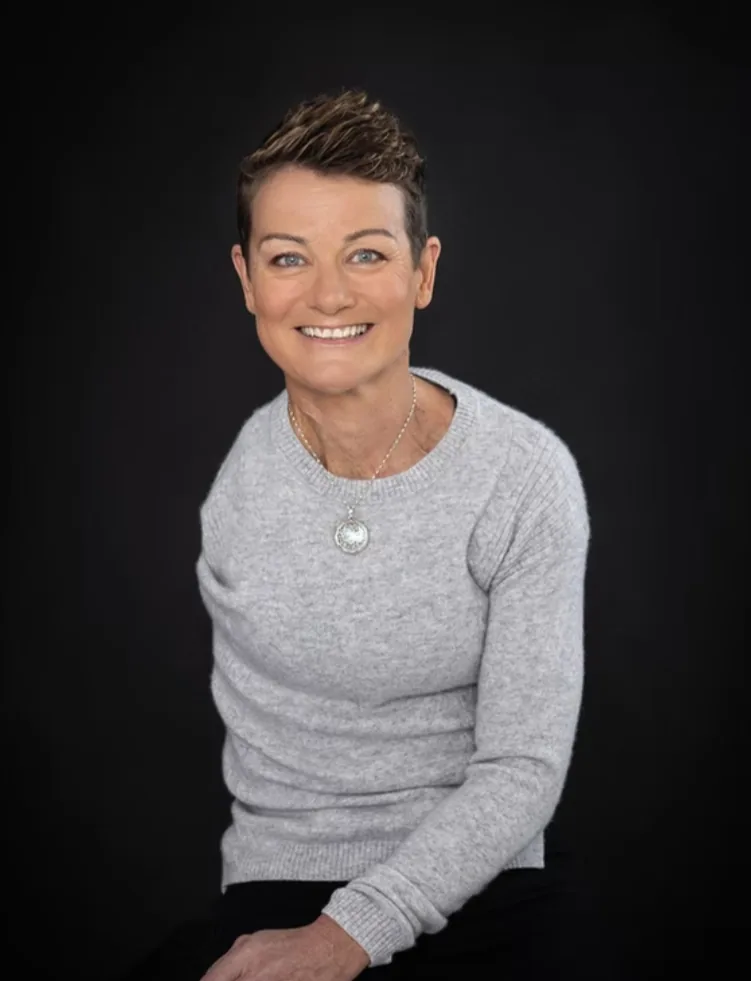
Kerryn Harvey had told the story of her flesh-eating bacteria infection on stage, on radio and on Sunday Night before she wrote Mostly Ups. Here she talks about what the page asked of her that a keynote did not, why the rehabilitation years matter more than the finish lines, and what it took to assemble one chronology out of her own memory and other people's accounts.
You have been telling this story from stages, on Sunday Night and on radio for years before it became a book. What did the page demand of you that a keynote never had room for?
So many differences between telling my story on stage or on radio as it is to telling it in a book, writing it down. On stage and on those pre-recorded radio interviews, it really just glosses over the surface of everything that's been part of my journey. So you never really go into great detail, and you never really get emotionally deep into what you're saying. It's just really giving the basics.
In writing, I found I was able to actually get right back into those spaces where I was back 13 years ago, when it was my reality. I had time to sit in those moments and really think through and understand everything I'd been through. I was able to really draw on all those emotions and all the things that everyone else had told me about some of those moments that I wasn't aware of, as part of the writing process. Putting those on paper was like going back there all over again, like all the emotions came out again. And it really, really made me appreciate what I've achieved and what I've been able to do since those early dark days in hospital.
It was actually fascinating, the difference. It was just so much more deep. It was almost like reliving it all over again.
The title is Mostly Ups, not All Ups. What is that word "mostly" protecting, and were you ever tempted to write the neater, more triumphant version?
Using the word mostly ups instead of all ups, I think it is protecting perfectionism. In the book, I describe all the ups and downs of getting well, going through rehab, getting back into sport, relationships. Nothing went perfectly, and sure, there was some triumphs, some great triumphs, but it was not an easy road.
So mostly, I guess, is a metaphor for life. We go through our lives striving for the best versions of ourselves, striving for excellence, but it's not a straight line. It's up and down. It's all over the place. We have big setbacks, and sometimes we have to take left-hand turns, right-hand turns, go backwards. So I think that's what the mostly word is kind of protecting. It's protecting the story from being, "Hey, look at me. I did this and I did this, and how fantastic am I?" It's not about that. It's about all the ups and downs along the way, and finding ways of getting around things and pivoting and just making the best of what we have.
And of course, there's a great story in the book about why it's called Mostly Ups and how that started, when the ICU nurse Lou left a message on my bed when I was having a pretty hard time, and struggling with all sorts of medical issues, and felt like I was going backwards. So that wording was perfect because at the end of the day, I was slowly getting better, despite the setbacks. So that's what the word mostly is protecting, that perfectionism, which just isn't achievable.
Survival stories often cut from the intensive care unit to the finish line. What did writing the book teach you about the long middle, the rehabilitation years between surviving and rebuilding, that you had not fully articulated before?
Writing Mostly Ups has taught me that most people don't really see what's going on behind the scenes. They see the end product. So one minute Kerryn's in hospital, extremely unwell, the next minute she's done a fun run, she's done a triathlon, she's done this open water swim, she's been on a bike. And they think, "Oh, wow, how amazing is that? How inspirational." All those words that I hear over the years. But what I've found out through this writing process is that a lot of people never get exposed to what actually goes on between the beginning and the end of these individual stories, like learning how to ride a bike.
So it's been really good to be able to actually show people behind the scenes, all the brainstorming, and the trial and error, and the amount of people involved to get me to the point where I'm posting up a picture of me crossing a finish line, whatever it is, fun run, triathlon, ride. It's hard yakka, with all the bloopers and mistakes that I made along the way.
So I reckon it's been actually fantastic to expose even people close to me that don't really realise the day-to-day things that I have to do just to function, let alone play sport, or work, or do all the other things that I do. That there's a lot of things going on behind the scenes before you see the glossy final product.
Writing has really taught me that people didn't know about what I do behind the scenes. A lot of people didn't know. So I've really enjoyed exposing that part of my life to people and getting to really understand how difficult it can be at times living with a disability, and how many people you need around you to be able to function and live a relatively normal life.
So I think that's the main learnings that I've got out of that long middle, rehab years between surviving and rebuilding. And I probably haven't articulated that well before, so it was a great opportunity to actually do that, and I think people really appreciate it now that they can see, "Now I really understand you and how you've been able to do what you've done, because there was so much that went on behind the scenes and over a long period of time. It didn't just happen overnight. It was a very slow process."
Memoir means reconstructing 2013 from medical records, other people's accounts and your own patchy memory of being critically ill. What surprised you most about what you remembered, and what you had to be told?
I don't think there was any real surprises about what I remembered and what I had to be told, because we've hashed it and rehashed it over the years. So I kind of knew everybody's accounts, and I remember what I remember.
It was more, not surprised, but it was overwhelming in a lot of respects, remembering what I remembered and trying to get that down in writing, but also listening to other people's accounts and asking them to write their account, and how overwhelming they found it, equally as overwhelming as I found it, and how traumatic it was for everyone to relive some of those moments.
But it's also been a really great thing to do, to finally get it all together into a couple of paragraphs, and put it into a sort of a chronological order that made sense. And it made everything make more sense to me, having everyone's versions. And finally, I felt like for the first time, I could put the whole story together instead of hearing a bit here and a bit over there from someone else, and sort of not fully understanding when things happened and when somebody arrived or left or did whatever they did.
So I think that was probably what I took away from all that. It was definitely overwhelming. I think that's probably the main emotion. Is overwhelming an emotion? I don't know. But it was one of the main things that I felt, and I think everyone else did too who was part of that story.
I'm just glad I've got it all down now finally, and it's there forever now to rehash again one day when we're ready, probably over wine or champagne.
You coach clients at Nine Lives Training who arrive with their own limits and setbacks. Has writing the book changed the language you use with them, or made you more careful about phrases like "never give up"?
Writing Mostly Ups hasn't really forced me to change the language or made me think about the language I use with my clients at Nine Lives Training. But yeah, I am a bit careful with phrases like never give up, because sometimes in certain instances you kind of have to give up on a goal if it's out of reach, or something happens where you just can't get to that endpoint.
It has made me more mindful about being really encouraging, being the best version of themselves. Having goals, sure, achievable goals, and then breaking it down into mini goals that you tick off bit by bit, little chunks. So it's been more about that. They're not all built like me, who goes out and sets a big goal and leaves no stone unturned to achieve it. They all come from all different backgrounds and different lives and different situations. So I can't expect everyone to be like me. Thank God for that.
So yeah, I think I'm a bit more gentler on them perhaps. And really it's all about encouraging them to be strong and mobile and flexible, and yeah, sure, if you wanna go and run a marathon, that's great, but we're gonna do this in a way where you can get to the start line fit and healthy and ready to run. And we're gonna have trained you enough so you can get to the end fit and healthy, and you still can live your normal life after that.
They're all kind of my age bracket anyway, around there, sort of that 50 to 65, 70 mark. So none of them are really striving to do outrageously crazy physical challenges at the moment anyway. You never know.
So yeah, I think the main thing with my language is I'm probably trying to be a bit more encouraging and a bit more gentle with them than maybe I used to be. I'm not sure. I think that's still a work in progress for me. But they keep coming back, so they're obviously doing something right.
With publication close, the story stops being yours to frame in a room you can read. What are you most curious about, and what would you say to someone sitting down to write the hardest year of their life?
It's funny, when I published, it was like I kind of held my breath. I was like, "Oh, my book is out there now for everyone in the world to read. All my friends and family, they're gonna read about things about me that maybe they didn't know about before. And all the people that I see down the street and go in Woolworths, they might have read my book and they're gonna know things about me that I haven't shared with many people over the years." So it was a bit like, "Oh, I don't know what the reaction's gonna be." Fortunately, I've only had positive reactions, so that's been good.
But I guess when you do publish and put it out to the world, you're exposing yourself to whatever people wanna think or what they wanna say about what you've written. So yeah, it makes you feel a bit vulnerable. It makes you definitely feel vulnerable. But I'm okay with it now. I've come to terms with it. Especially once the first person finished it and gave me their feedback, I felt a lot better. I felt a lot, lot better about it. I was like, "Okay, phew, somebody actually likes it." And when you start selling some books and you see it being bought by people you don't know, you think, "Okay, this is pretty good." So I've had a really good response so far and I feel very fortunate in that way.
But yeah, as far as sitting down to write the hardest year, or years, of your life, I found it really cathartic myself. I'm really, really happy I've got it all down now. Whether I publish it or not, it was just great to write it down and relive some of it and just go through it all again in my mind and have a really good think about everything, and it made me feel really grateful, just for the people I've got in my life. And it's amazing what you think of as you're going along. It gives you a real good appreciation of what you've achieved in life.
And even, like writing the book was just to write a book. I was never gonna write a book. So to actually physically do that, it's just a great feeling. It's as good a feeling as finishing a big sporting event, which as you know, that's my thing, or qualifying as a personal trainer, or starting a charity. All those things which have been amazing achievements for me. Writing a book is right up there with all of those.
So it's been so rewarding. I could not recommend more highly for someone to write about their experiences, whatever they are. If it's a hard year of their life, you'll probably find it very cathartic. So yeah, I would just do it. And whatever you do with it, once it's written, it's up to you. But to get it down is really, really rewarding and satisfying.
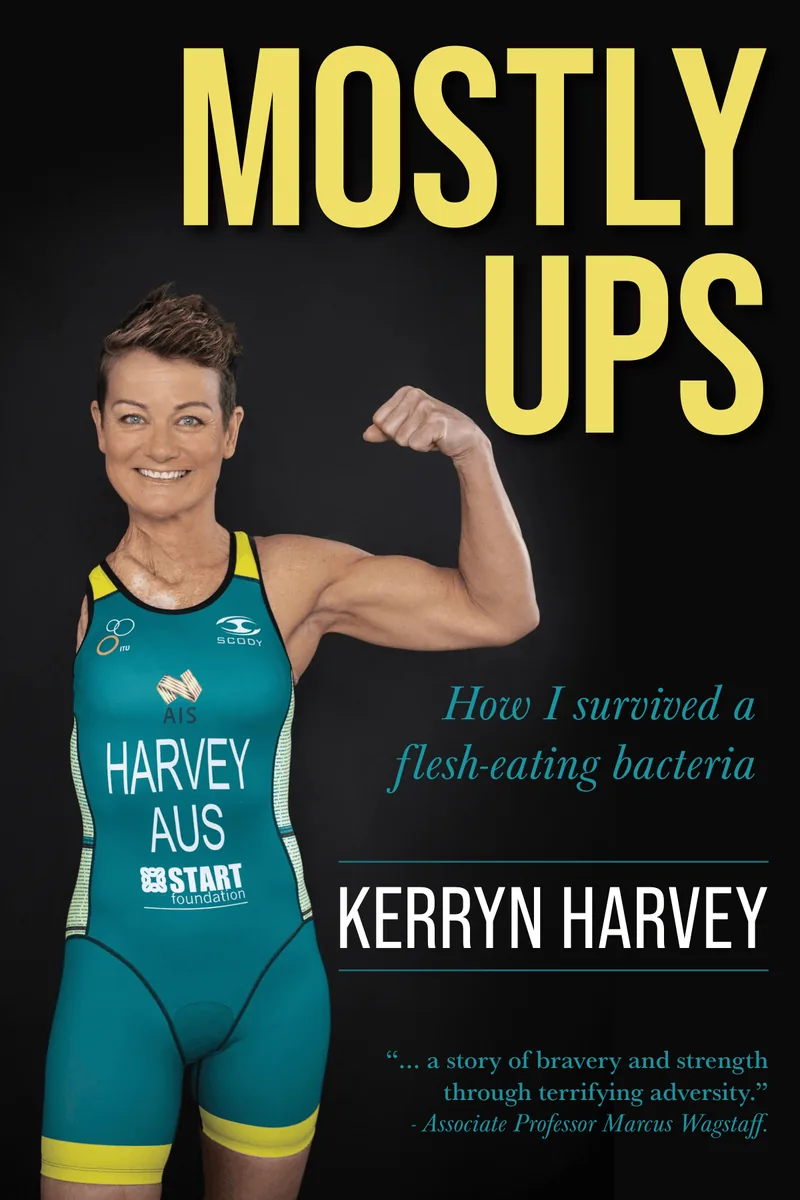
Mostly Ups: How I Survived a Flesh-eating Bacteria is available from Kerryn's website.
You can connect with Kerryn on LinkedIn.
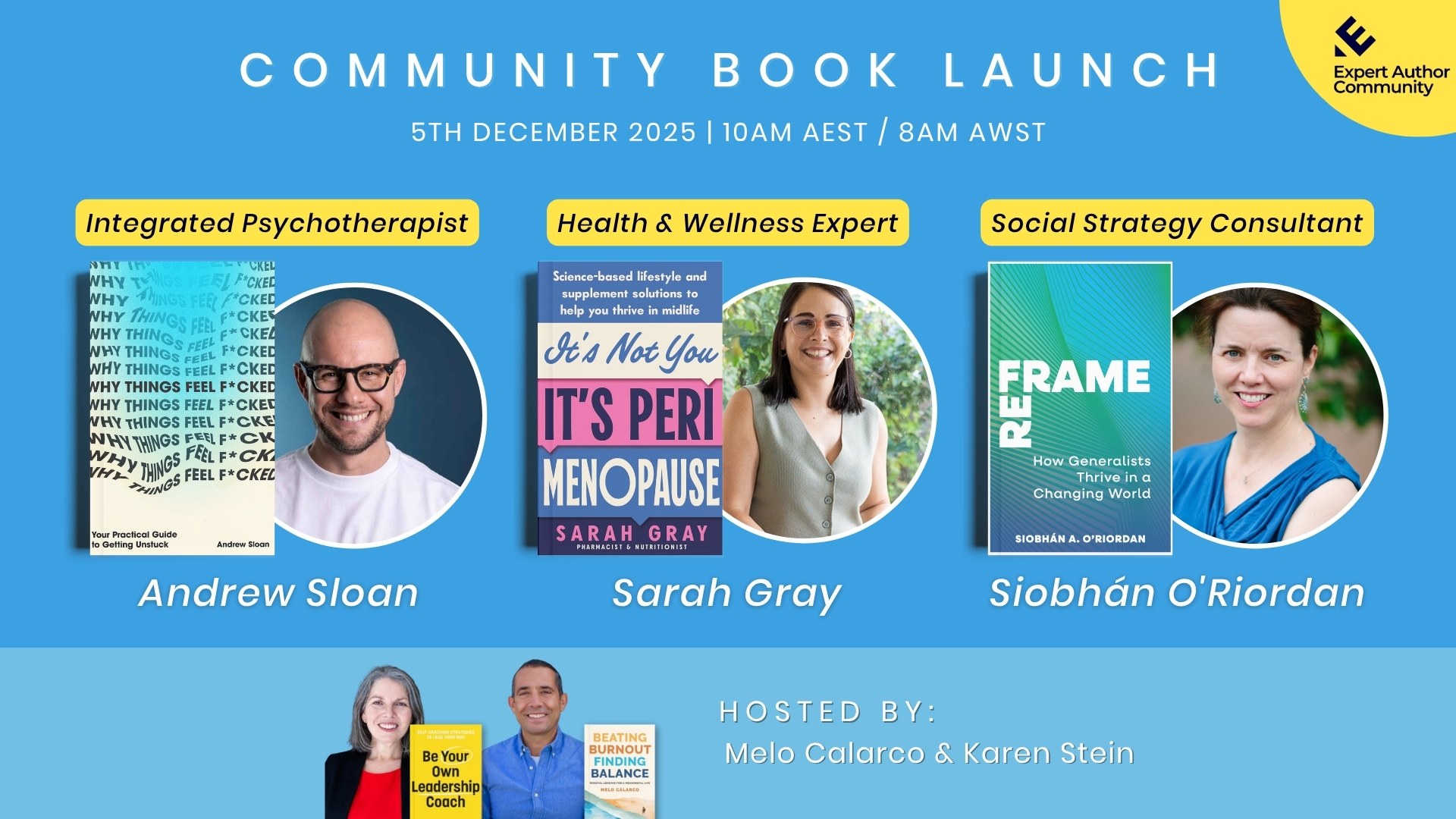
A Help Sign Where the Conclusion Should Be: Lessons From Our December 2025 Community Book Launch
Penelope Barr on Win the Night to Win the Day

Why Are You Writing a Book? The Purpose Question Most Authors Only Half Answer