
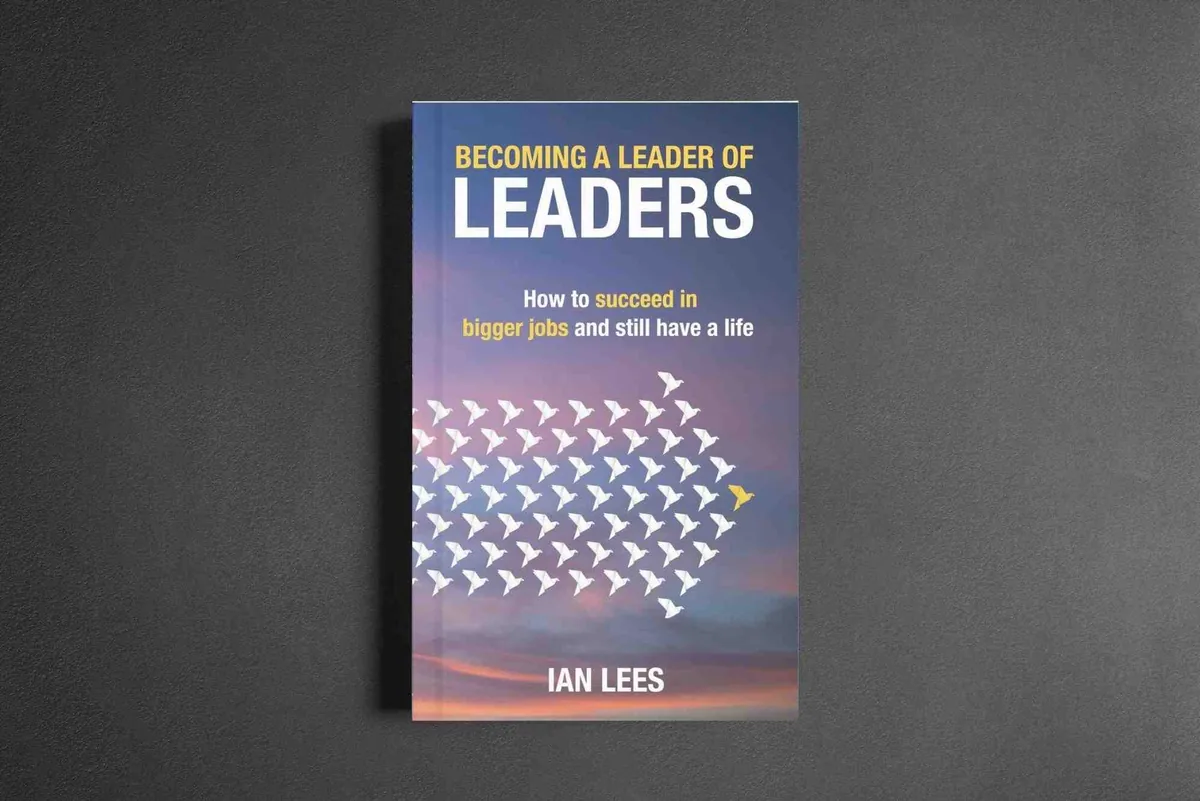
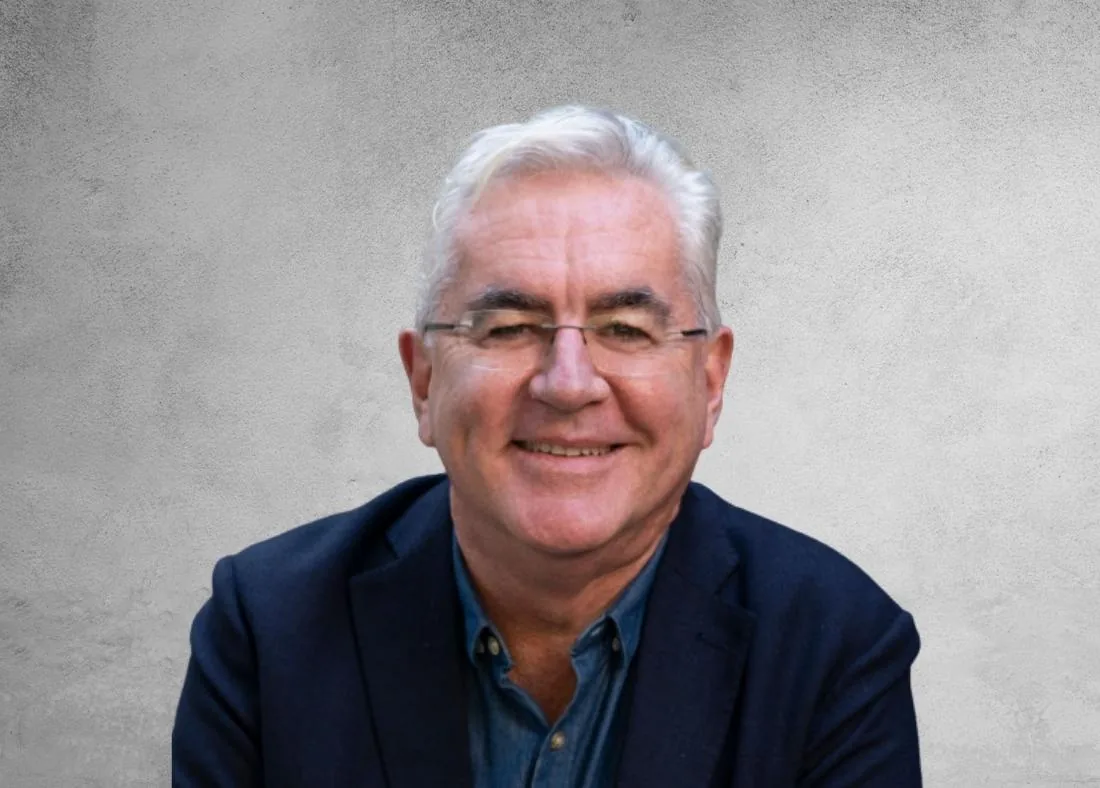
Ian Lees argues that leading other leaders is a different job rather than a bigger version of the one before it, and that missing this is what sends new leaders into busyness, long hours and burnout. He also talks about the Sandbox Triangle delegation framework now driving a new business, and what writing a leadership book gave him when he came to write a memoir.
Becoming Leader of Leaders came out in early 2022, and you've described the shift from professional contributor and team leader to leading other leaders as a real threshold. Three years on, which part of that move do you find people still most underestimate?
People still underestimate how much leading other leaders is a completely different job to what they have done so far. There is still a tendency to assume leadership is a set of interpersonal skills that are basically the same in whatever leadership job you have. In a way this makes sense. When you become a leader of leaders it's often in the same organisation that you are already working in, you go to the same building, you see a lot of the same people and you sit in the same meeting rooms or have the same online backdrop. If people don't make the changes to become a leader of leaders, they very quickly become insanely busy and start working harder and longer hours. In our sometimes crazy world, this busyness becomes a badge of honour. The new leader of leaders assumes this is what it takes to succeed in a bigger job and often people around them and the organisation itself send lots of positive vibes and high fives for this clearly stellar commitment. But the day to day reality is brutal. Heightened stress and anxiety, less time spent with family and friends, no chance to regularly recharge and no time for exercise. Next stop is exhaustion and burnout and for some people anxiety and depression. Deeply understanding that the leader of leaders role is a completely different job and so requires a completely different approach is the essential first step to succeed at bigger jobs and still have a life.
You've coached hundreds of leaders through this transition, many of them since the book was published. Is there anything in it you would now argue differently, or press much harder on?
I think the core shifts are still important and valid. They are also quite interconnected. You really have to work on all of them to succeed in the leader of leaders role. For example, I would give more emphasis to Chapter 6 Influence to Integrate. But to be able to do that, leaders of leaders will have to master Creating Sandboxes for their leaders. That said, as the world keeps changing at a crazy pace, it has become even more important for leaders of leaders to spend at least 30%-40% of their time focused beyond their immediate teams building connections across and beyond the organisation. Since the book was released, I have had a lot of feedback that the message and tools in the book are just as important for experienced leaders of leaders moving into new roles and new organisations. I wanted to give the book a clear focus but I have learned that the approaches in the book have even broader application. However, from a business and book marketing perspective, I would still keep the focus specifically on Becoming a Leader of Leaders as this differentiates the book in a crowded leadership development market.
Your practice is built on one-to-one coaching, where everything is tailored to the person in front of you. What has the book been able to do for your work that a coaching conversation can't, and has that surprised you?
At times I have tried to bring in a more step by step 'topic' approach to my one to one coaching work but it never works! I strongly believe that the high value of one to one coaching is that it is tailored to the person in front of me. That said, the book helps to show my coaching clients that I do have a strong theoretical foundation to my approach. Also, some people really like to start with content and work off that. So, that works for them as well. The content of the book is very clearly laid out and very accessible. I can refer people to specific sections of the book to support where they have got to in their coaching. Also, I have been surprised just how much having written and published a book increases your credibility with clients and in the market. I had to cut out my self-effacing crap and graciously accept that now I am a guru because I have a book. Conversely, writing the book and seeing people read it and make changes to their work and life has helped me to say to myself; you know what; you are a guru!
You're clear that leading is not a formula and that it asks for the engagement of the whole person. Was there any pull, from yourself or from readers, to make the book more of a step-by-step how-to? Looking back, are you glad you resisted it?
I'd say most people in large organisations I have worked with look, at first, for specific steps and actions they can take to solve problems. 'How to's' can be useful and have their place but they inevitably over-simplify the real world of people and work. Part of my challenge as a leadership coach is meeting people where they are at but not leaving them there. 'How to'/step by step can give people enough confidence to take some action. When they do a leadership action, they have an experience. Often that experience turns out to be much more complex than they first thought and they will come to a coaching session happy that they have done something but confused because the experience has thrown up more, deeper questions. Real development as a leader inevitably takes the person into observing themselves; their own thinking, feelings and assumptions. So, it is a balancing act. In my book, I tried to make the book 'practical' but also help people to experience and think more deeply about themselves and leadership. Looking back, I think I got that balance right. Interestingly, although people ask for 'practical' how to tips initially, they often don't find these 'how to's' all that satisfying. They seem to know intuitively that it is all more complex than a simple action plan.
A lot has shifted in organisational life since 2022: hybrid work, relentless restructuring, AI arriving in everyone's inbox. Which ideas in the book have held up best under all that, and is there anything that now feels tied to its moment?
I often wonder about this myself. A lot has changed. What feels tied to its moment? I do put a lot of emphasis on face to face one to one conversations. Sometimes I wonder if that is all a bit quaint now with MS Teams, messaging Apps and work tracking. Although, out in the world of work, people still seem to gravitate to face to face. If anything, many people seem to value face to face conversations even more. The principles in the book are still valid but maybe now they are expressed in different or a wider range of contexts. The one that has surprised me for its ongoing and increasing popularity and usefulness is the Sandbox Triangle. So much so that I have launched a new business called 'Being Leaders' and its leading service at the moment is programs based on the Sandbox Triangle. Sandbox Triangle is basically a delegation framework. A few people have raised the idea that it is a potentially powerful tool to manage human beings and also AI agents.
You have since written a memoir, a far more personal kind of book than a leadership one. What did the discipline of writing Becoming Leader of Leaders give you that carried over, and what did you have to set aside entirely?
Many of the disciplines carried over including thinking about structure and reader experience across the whole book, rather than just writing words and hoping they grab people. The big one for me is that I know that I can write a book. Writing a book is a long and consuming (and outrageously satisfying and enjoyable) experience. It is a job. You have to have a kind of tradie mindset. Set a time, turn up and write for a block of time and then stop. Come back the next day and do it again. Structure and reader experience was just as important in the memoir I wrote, although, I did need to loosen a bit and allow my creativity and imagination to flow unconstrained as well. This often birthed chapters and ideas that I didn't think of in my initial plan. But writing Leader of Leaders gave me grounded confidence. Becoming a Leader of Leaders was 30,000 words. My memoir, 'My Temporary Daughter, Searching for Life in Unpopular Grief' was 60,000 words. The novel I am writing now will be 80,000-90,000. Writing Leader of Leaders definitely gave me the confidence to know 'I can do this!'
How has publishing your book influenced your coaching business?
It has had a big impact on my business by giving clearer definition to my market position and credibility. It has also helped me to realise that I do know stuff and I am an expert. But it has done this in a very tangible way. The experience of writing a book forces you to make conscious and explicit what you know. I think this is especially useful for professionals who may have decades of experience, so much of which becomes integrated, unconscious and assumed and therefore not seen, not articulated and misses out on generating the value that it has. This value is personal, for marketing and financially.
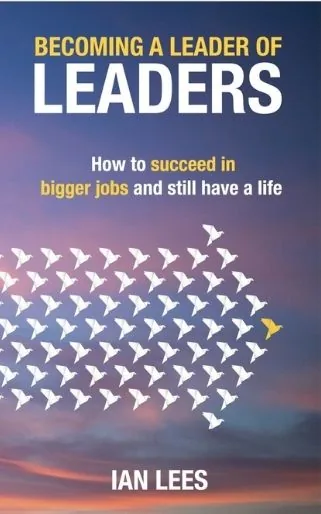
Becoming Leader of Leaders is available from Booktopia, Amazon or Ian's website.
You can find Ian at beingleaders.com.au and connect on LinkedIn.
TyAnn Osborn on A Life Aligned


Graeme Cowan on Great Leaders Care: Developing Safe, Resilient and Successful Teams
Jo Muirhead on The Entrepreneurial Clinician