
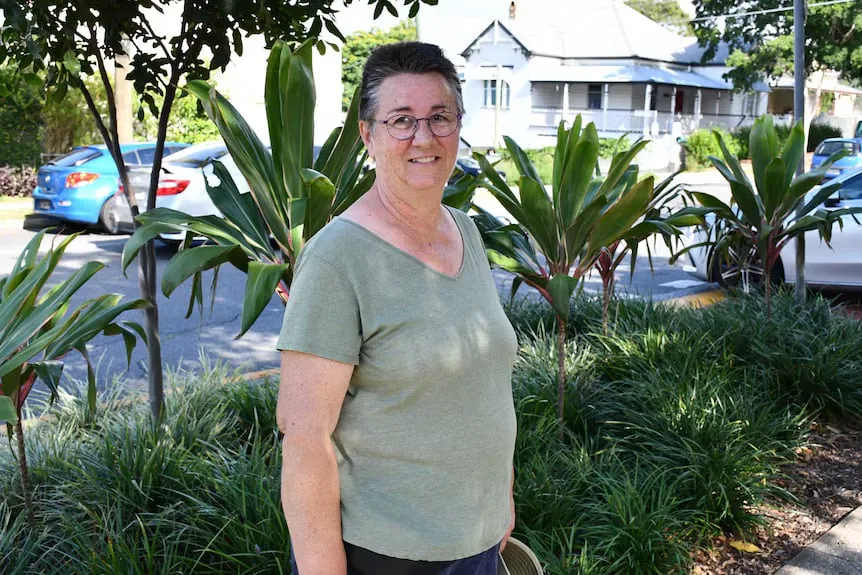
Gayle Dallaston planted her own verge garden in 2017 and has spent the years since looking at why so many similar projects stall over neighbours and council rules rather than plants. She talks about writing Garden On The Verge as a deliberately short first book on shared stewardship, and why she thinks a few square metres of grass outside one house is where urban heat becomes something people can feel. Her own verge featured on ABC's Gardening Australia: watch Urge to Verge.
You planted your own verge garden in 2017 and have been studying community-led greening ever since. Eight years on, what eventually led you to writing the Garden On The Verge book in this format?
I had already written a lot but websites, blogs, and newsletters lack the structure and cohesiveness of a book. Readers get snippets and think they understand but they can miss the bigger picture.
My intention was to write a book about running collaborative projects in the community with verge gardens as a readily available project to start. During the writing process, I realised that I really needed three books with Garden on the Verge as the first book with its own purpose and audience. This book takes the reader through that first crucial step of aligning with other participants towards a shared purpose of greening our streets. The book also becomes a tool for councils and group project leaders to help new participants understand the reasoning behind restrictions and accept that they are necessary.
The book deals as much with neighbour disputes and differing expectations of shared space as it does with plants and shade. Why do you think so many verge projects stall over people rather than horticulture, and was that balance something you planned for the book or something the research forced on you?
Over the past few years, many others have started promoting verge gardening and there is increasing academic research on the environmental and social benefits. Most don’t differentiate between verges and other public land so they miss the governance issues. Nobody is disputing those benefits but the take-up rate and compliance with council policies is low. Every dispute makes both councils and residents more wary.
The question I’ve always asked is: “How do we scale to turn it from a niche activity to being mainstream and able to be leveraged to lead to more solutions?” That question takes you into the world of culture change needed for sustainable cities, collaborative governance models, and the wicked problems of the climate wars. That is the research that underpins my approach. But discussion about those ideas doesn’t belong in this book. The readers who want to progress to group projects and more complex transdisciplinary collaborations will get it from the later books.
Although I use real photos of real plants as examples, plants are also framed in the context of how they make different people feel about the space and what you are doing. Council guidelines and suitable plants will vary in different locations so you can’t be too specific about them. This isn’t intended as a gardening book - it can be read simply as how and why to start working with your council and nature to create a greener city.
A verge sits in an awkward spot: council land, resident labour, public benefit, private frontage. How did writing the book sharpen the way you explain that ownership question to residents and to local government, who presumably need very different arguments?
That awkwardness is the thing that creates so much opportunity. There are so many different ways people view this land but that’s hidden until a dispute brings it all to the surface.
Separating this into a book on its own gave me more space to expand on these ideas for a more diverse audience. It is still a deliberately short book for busy people - about 9000 words with photos, good quality paper, and a comfortable to read layout.
It took a lot of rewrites but I think I eventually managed to explain the idea of shared stewardship in a way that makes sense from many different worldviews. It reframes the idea of council policies from bureaucratic rules to sensible guidelines that save people having to find out the hard way that it is a more complex place than they realised. That also reframes everyone involved from being opponents to just being people with different levels of experience.
You've spent years in language, communication and online community building before this. Did that background change how you wrote the book, and were there words or framings you deliberately avoided because of how they land with a sceptical neighbour or a cautious council officer?
That background is the core of everything I do; and it’s why the early conversations on my verge triggered my interest. The language used in council policies and the varying language used by everyday people shows the gulf between the way we all understand and experience the world. It’s like everyone is talking different languages.
Garden on the Verge translates this into something everyone can understand in the context of their daily life, and shows them that we can all be on the same side. On one hand, you have to convince a lawn-loving neighbour that you’re not going to wreck their neighbourhood and on the other reassure a council that you won’t plant silly things or start a war in your street. It’s like a microcosm of the climate wars - we need to stop shouting at each other, listen better, and find common ground. Then we’ll make more progress and find innovative solutions to the challenges we all face.
Urban heat and biodiversity loss are usually discussed at the scale of policy and budgets. What is the case for the verge, a few square metres outside one house, as the place where this actually gets solved, and why does that argument matter particularly now?
Urban heat is already a public health issue, and we are facing even hotter summers. Many Australian councils have tree canopy targets to reduce heat but struggle because of the demands of housing and roads, and a significant number of residents who don’t want street trees. Because the verge is public but right in front of people’s homes where they walk around their neighbourhoods, it’s a space where people can experience how much cooler it is when you walk from hot sun into the shade of a tree. That’s how we connect tangible lived experience to why policies and budgets matter.
Now that the book is out and people are responding to it, what question are readers asking you that you didn't anticipate, and what would you tell someone who has just decided to dig up their own strip of grass this weekend?
I’ve had a really positive reaction to the book, especially from people who have had things stall or go wrong and now they have an explanation why and how to avoid problems. It gives them renewed confidence.
For people starting out, don’t rush into it. Buy or borrow the book from your council library - or check out the articles on my Substack. Have a look at other people’s verge gardens and reflect on why they might have planted the way they did. I encourage groups to do verge garden visits and post their stories online. Some councils have set up example gardens that fit their individual guidelines.
Start small, experiment, and be kind to yourself and others when things don’t work the way you expect. This is the start of a new adventure.
Why did you choose self-publishing?
Self-publishing was the obvious choice for me because I needed the control and speed to fit these books into the business and online media structures I already had in place. That meant I had to invest in learning about the book publishing industry as well as how to write the book itself.
.webp)
Garden On The Verge: A New Approach is available from Gayle's website.
You can find Gayle at gayledallaston.com/about and connect on LinkedIn.

TyAnn Osborn on A Life Aligned


Graeme Cowan on Great Leaders Care: Developing Safe, Resilient and Successful Teams
Jo Muirhead on The Entrepreneurial Clinician