
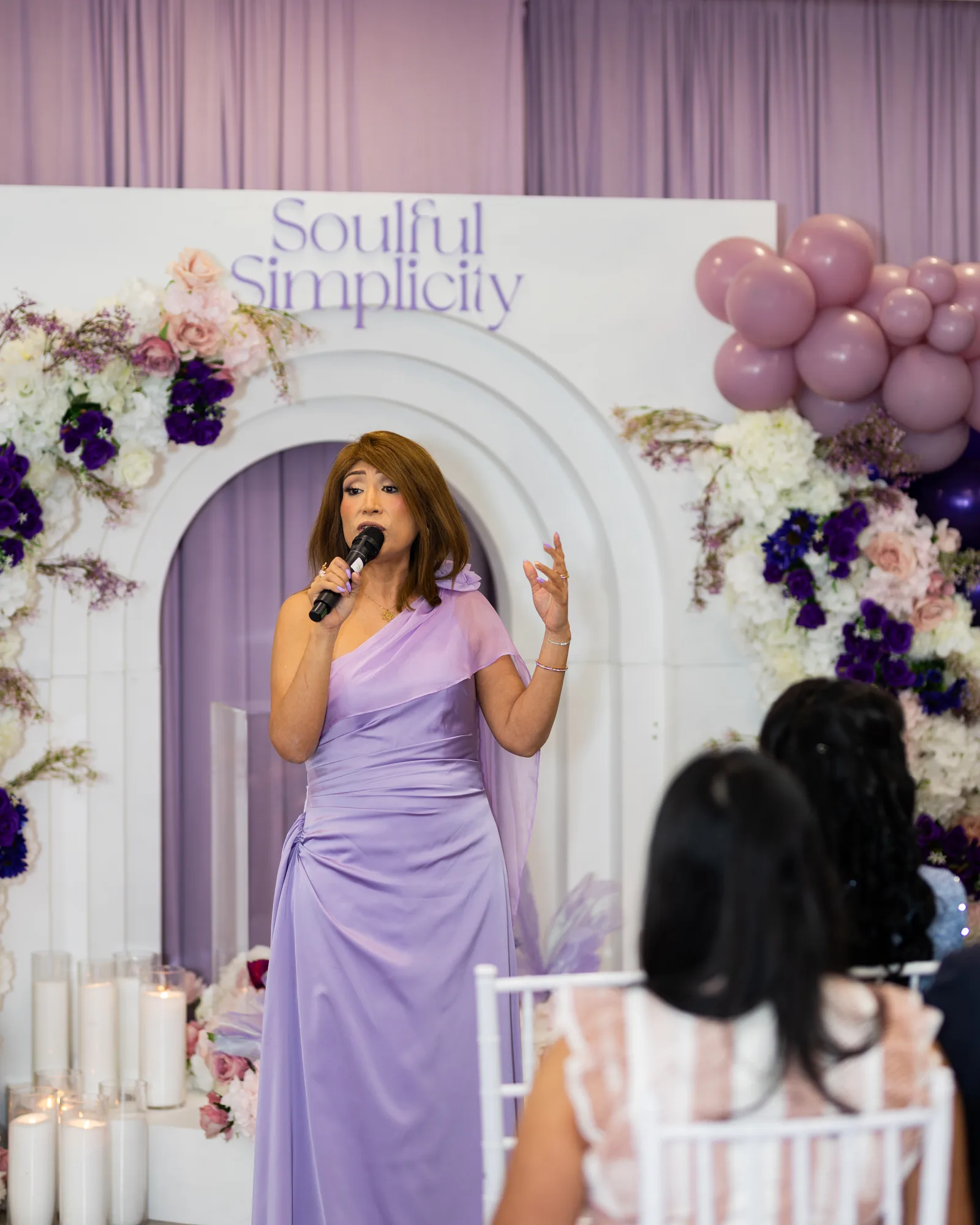
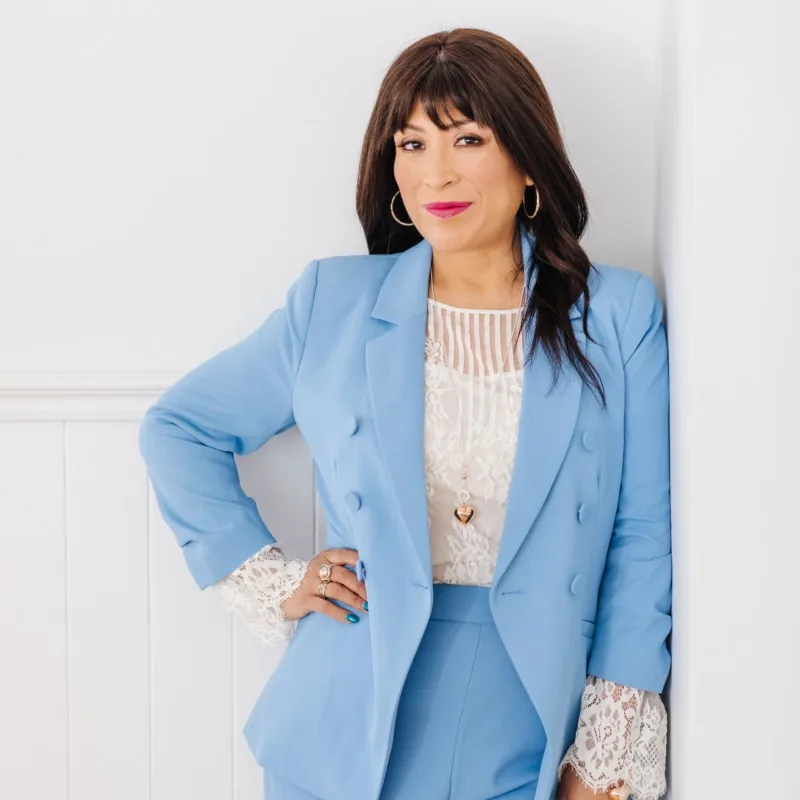
Faye Evans spent more than thirty years in clinical practice before writing Soulful Simplicity, a book that grew out of a retreat program and is structured in three stages: Lost, Found and Whole. She talks about why she treats simplicity as an internal question rather than a decluttering one, which clinical idea was hardest to put into plain language, and why she came to see courage as something women grow into through change rather than bring to it.
After more than thirty years in clinical practice, what was the thing you wanted to say in Soulful Simplicity that you couldn't say inside a therapy hour?
After more than thirty years in clinical practice, I feel I can say: you don’t have to reach a breaking point before you’re allowed to change your life.
I’ve met so many people who are capable, caring and dependable, yet quietly exhausted from keeping appearances. They can tell you what everyone else needs, but struggle when you ask, “And what do you want?” Somewhere along the way, their own voice has grown harder to hear.
A therapy hour makes space for one person’s story, bringing healing, closure and reflection, one at a time. I wanted Soulful Simplicity to carry that invitation beyond the consulting room, to the many who are still saying, “I’m fine”, while wondering why their lives no longer feel like their own.
The book also gave me space to merge my clinical understanding with my lived experience as a woman who has had to begin again multiple times in life and learn to own her story. I wanted to explore the bigger questions: Who am I beneath all these roles? What still matters to me? What am I ready to let go of? I wanted to write not as an expert but to journey with the reader along the transformational path.
Ultimately, I wanted to say we can honour the person we became and accept the steps we took in life that helped us grow into who we are today. We don’t have to keep proving how much we can carry. We can start choosing what is ours to carry and make room for a life where we feel present, alive and authentic.
"Simplicity" is a crowded word right now, often attached to decluttering and minimalism. What do you mean by it, and what does the nervous system have to do with slowing down?
A few journalists and podcasters have asked me this lately, and I completely understand why. “Simplicity” is often associated with decluttering or minimalism. However, for me, it starts with a deeper question: what deserves space in my life?
You can have a beautifully decluttered home and still feel overwhelmed by obligations, expectations and the pressure to be everything to everyone.
The simplicity I’m proposing is about an internal declutter, making room to hear ourselves, connect with our intuition, and align ourselves with our values by reassessing our priorities
In Soulful Simplicity, I’m talking about how we live within ourselves. Recognising the patterns we keep repeating, questioning what we say yes to, and making choices that reflect what matters to us. Sometimes that means doing less. Sometimes it means having a difficult conversation or making a change we’ve avoided for years. Simplicity can require courage.
The nervous system matters because slowing down isn’t always as easy as deciding to rest. When we’ve spent years anticipating needs, managing uncertainty, or staying constantly available, busyness can become familiar. For some people, stopping brings discomfort: guilt, restlessness, or feelings they haven’t had space to notice.
That’s why I encourage taking small, manageable pauses. Feel your feet on the ground. Notice your surroundings. Take a moment before responding to another request. These practices can help us recognise our internal state and find a little more room to respond deliberately.
Simplicity doesn’t free us from a life without complexity. But it can help us reframe how we meet each day and maybe start choosing a life where every demand doesn’t automatically become our responsibility. The aim is to have enough space in our lives to inhabit them, rather than feel life is drowning us.
Your work sits at the meeting point of neuroscience and soul, which are two vocabularies that don't always sit comfortably together. How did you hold both on the page without one flattening the other?
This is a wonderful question. I held them together by respecting what each could offer. Neuroscience offers a biological lens for understanding how we respond, adapt and change. “Soul” is the word I use for our inner life: meaning, values, connection and the sense of being deeply ourselves. We may not use those exact terms in everyday conversation, but both perspectives inform how we understand who we are. I didn’t need one to prove the other.
After many years in clinical practice, I’ve learned that understanding a pattern is valuable, but people also want to know what it means for the life they’re living. We can explore why someone finds change difficult and still ask: what matters enough to them to take that step? What do they long for? What kind of life do they want to live?
Throughout the book, I gave both ways of understanding room to breathe. I brought research into places where it could clarify an experience, and used reflection, story and questions to leave space for the reader’s own meaning. I was careful to distinguish evidence from interpretation. A spiritual experience doesn’t need a scientific explanation to be personally meaningful, and its meaning doesn’t make it scientific evidence.
Neuro-spirituality isn’t a concept I created. It draws on a long-standing exploration of the relationship between the brain and spiritual experience, including several decades of research into practices such as meditation and prayer. What interests me deeply is how that conversation connects with everyday life: our search for meaning, belonging and wholeness. In a world that demands so much of our attention, these questions feel especially relevant.
I’m also a deeply spiritual person. Through the hardships I share in the book, I believe I have been carried by faith, sustained by hope, and touched by moments I can only call miracles. That belief has helped me take the next step when I couldn’t see the way ahead, and it is part of what I bring to these pages.
My contribution was to give the spiritual dimension a more prominent place alongside biology, psychology and behaviour, and to explore how they come together in the whole experience of being human. Through Soulful Simplicity, I wanted to help readers understand the patterns that shape their lives while reconnecting with their essence, the values, longings and sense of self that can be obscured by expectations and responsibilities.
Writing a book forces you to put concepts you use daily, attachment wounds, schemas, living on autopilot, into plain language for a reader who has never been in your consulting room. Which idea was hardest to translate, and what did that struggle teach you about the idea itself?
I think schemas were the hardest to translate because they can sound abstract yet are deeply personal. They shape what we expect of others, what we believe we deserve, and how we respond when we feel hurt or uncertain. I wanted readers to recognise something of themselves without feeling labelled.
So, I brought the concept into ordinary moments: saying yes when you want to say no, feeling guilty when you rest, or believing you must be useful to be loved. A reader may never have heard the word “schema”, but they may immediately recognise the feeling: “If I disappoint someone, will they still want me?” I used many everyday examples, which are easier to identify.
The challenge was explaining how patterns shaped by earlier experiences can become limiting, without turning understanding into blame. I wanted to leave room for compassion towards our families, recognising that those who care for us can unconsciously act within their own limitations and still cause hurt, even unintentionally. Equally, I wanted readers to offer themselves compassion when they make mistakes or repeat familiar schemas. Understanding a pattern doesn’t mean we immediately stop living it; change takes practice, patience and a willingness to begin again.
That taught me the importance of giving readers ways to explore these ideas for themselves, so I included practical strategies, reflection questions and meditations throughout the book. Soulful Simplicity is a self-development book with therapeutic depth, but it cannot replace the individual care of therapy. If reading brings up painful memories, difficult emotions or overwhelming patterns, working one-to-one with a therapist is the best path for personal support and space.
Was there anything you believed about women and life transitions at the start of the manuscript that you had to revise by the end? What changed your mind?
I've always understood that change can be difficult for women. Coming from Peru, following women’s movements and later building a life in Australia made me aware of how culture, values, responsibilities and opportunities shape what is possible. But I think I initially placed greater emphasis on courage, grit, strength and fortitude as the qualities that helped us move forward.
What changed was my understanding of the process. Reflecting on my life and the many women I had worked with, I began to bring these insights into a retreat program called Embracing Change. Seeing women respond to that work encouraged me to develop it further. Over the next three years, it evolved into Soulful Simplicity, with its three stages - Lost, Found and Whole - and nine chapters that offer a path towards reconnection and change.
Transitions are part of life, and how we understand and approach them can make a difference. The more willing we are to embrace change, the better equipped we become to enter each new stage with awareness and self-trust. We cannot control every circumstance, but we can strengthen our sense of agency and choose how we respond. That enables us to participate more intentionally in our lives, rather than feel we are simply carried along by events.
By the end, I understood that we don’t necessarily begin with all the strength or clarity we think we need. Sometimes we begin by hearing a quiet inner voice telling us that something needs to shift, and by taking one small step in response. Through those steps, we gradually access our inner resources and discover possibilities within our circumstances. I came to see that courage, grit, determination, and everything else are qualities we can grow into through change, rather than things we must possess before we begin. The great discovery I speak of is that we all have those qualities within us; it’s just a matter of uncovering them.
You've started publishing reflective essays in Reflections in the Liminal Space ahead of the launch. What has surprised you about writing for an audience you can't see, after a career of working with one woman at a time?
What has surprised me is how magical writing can be to connect with people I may never meet. Sometimes a topic sits close to my heart, and an idea keeps returning, so I follow it onto the page. Those words then become part of the wider tapestry of human experience. Someone may encounter them at just the right moment, recognise something of their own life, and feel a connection.
In the consulting room, I can see how my words are received. Writing asks me to trust that connection without witnessing it. I’ve discovered a passion for writing that continues to grow. Lately, I’ve been invited to contribute articles to several magazines, which has brought me real happiness and a lovely sense of surprise. Writing has become a way to share what matters to me and to discover where it meets what matters to someone else.
What do you hope a woman feels when she closes the last page?
I hope she feels closer to herself, able to look at her life with greater compassion, recognise what matters to her, and trust that she still has choices, even if her next step is small. I hope she feels she has permission to listen to the voice she may have set aside while caring for everyone else. Above all, I hope she closes the book thinking, “I’ve spent years being who everyone needed. Now I want to discover who I can be when I start hearing the voice within.”
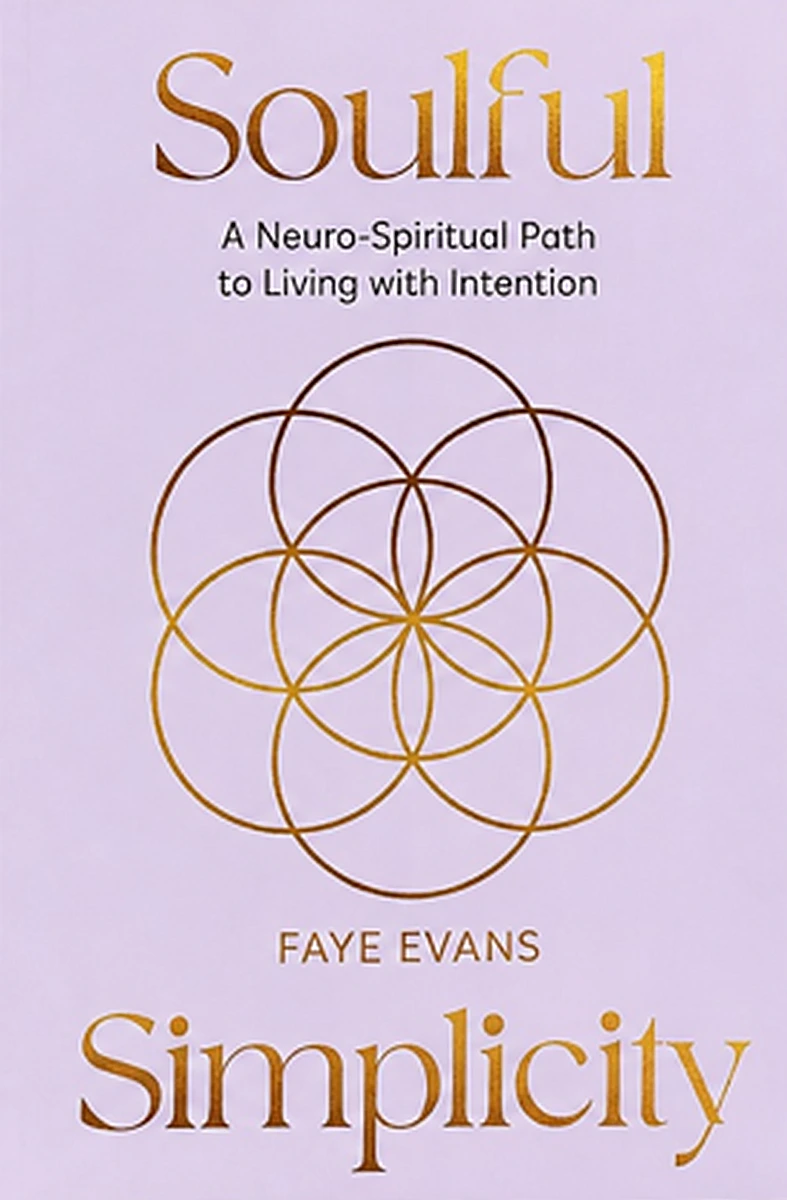
Soulful Simplicity is available from Faye's website.
You can find Faye at fayeevans.au and connect on LinkedIn.
Jacqui Clarke on Stop Worrying about Money

Monique Zytnik on Internal Communication in the Age of Artificial Intelligence
Maree Burgess on Level Up