


Ella Zhang wrote Upgrade about the inner operating systems beneath how people behave. Three years of work with founders, teams and government agencies later, she would now say agency rather than control, and she looks at the relationships and conditions around a person before concluding that the person is the problem.
Upgrade rests on the idea that we take back control of the difference we want to make by upgrading our inner operating systems. Nearly three years of client work later, which part of that argument has proved most durable, and is there any part you would now state more carefully?
The part that has proved most durable is the idea that we have far more agency over how we experience and respond to life than we often realise.
Nearly three years of working with individuals, leaders and organisations has reinforced my belief that sustainable change rarely begins with simply trying harder or acquiring another technique. It begins by understanding the inner operating systems beneath our behaviour, the assumptions we hold, the stories we tell ourselves, our emotional patterns, our habitual responses under pressure, and the degree to which we can notice and regulate them rather than simply be run by them.
That argument has become stronger for me, not weaker. Again and again, I have seen that when people develop greater awareness, regulation and agency, their external behaviour changes: how they make decisions, conduct difficult conversations, respond to setbacks, exercise leadership and relate to other people.
What I would state more carefully today is the idea of "taking back control."
I would probably use the word agency rather than control. We do not control many of the circumstances around us, and performance is never produced by the individual alone. People operate inside relationships, systems, cultures, expectations and conditions that can either enable or constrain them.
My work since Upgrade has therefore expanded from primarily asking, "What is happening within the person?" to also asking, "What is happening between people?" and "What are the conditions around them?"
I still believe deeply in working from the inside out. But I would now say that our inner operating systems give us greater freedom in how we meet the world; they do not make us solely responsible for everything the world produces.
Perhaps that is the evolution of the argument: upgrade what is within your influence, recognise clearly what is not, and develop the capacity to work intelligently with both.
Your work is now framed around three arenas: freedom within, harmony between, and conditions around. Upgrade sat largely in the first of those. Has your sense of where the leverage actually lies shifted since publication, and what shifted it?
Yes, my sense of where the leverage lies has definitely expanded.
Upgrade was largely about freedom within: developing the awareness and inner capacity to recognise our patterns, regulate ourselves and make more intentional choices rather than being run by our default responses. I still see that as foundational. Without some degree of inner freedom, it is very difficult to change how we lead, relate or perform.
But the years since publication have made me much more interested in what happens between us and around us.
Working with leaders, teams and organisations, I kept seeing situations where capable, well-intentioned people were struggling, not because they lacked self-awareness or resilience, but because the relationships or conditions around them made good performance unnecessarily difficult.
A manager can regulate themselves beautifully and still struggle in a system where expectations are unclear. An employee can become more confident and self-aware, but if conversations with their manager lack trust or honesty, that growth has limited room to translate into performance. And a team can contain highly capable individuals yet still underperform when accountability, decision rights or ways of working are poorly designed.
That shifted my thinking.
I began to see performance less as an individual attribute and more as something conditional and relational. The question became not only, "How do I become more capable?" but also, "What happens between us?" and "What conditions are we creating for people to do their best work?"
That is where the three arenas came from: freedom within, harmony between, and conditions around.
I don't think the leverage has moved away from the individual. I think I now understand leverage as moving across all three arenas. Sometimes the most powerful intervention is inner work. Sometimes it is a conversation. Sometimes it is changing a role, an expectation, a decision process or an organisational condition.
You write that performance is conditional, that capable and committed people underperform when the conditions around them do not support good judgement and ownership. What do you understand about that now, after years inside SMEs, startups and government agencies, that you could not have written in 2023?
What I understand much more clearly now is that conditions are not the background to performance. **They are part of the performance system itself.**
In 2023, I could have written about the importance of a supportive environment. What I could not have articulated as precisely was how quickly capable people adapt their behaviour to the conditions around them, often without anyone consciously deciding to do so.
If expectations remain ambiguous, people learn to wait. If decisions are repeatedly overridden, they stop exercising judgement. If mistakes are punished but good judgement is never developed, people become cautious. If leaders continually step in and rescue, capable employees can become dependent. If accountability is inconsistent, ownership gradually becomes optional.
Over time, these behaviours can easily be misdiagnosed as individual problems: "They lack initiative." "They aren't accountable." "They need more confidence." "They're not leadership material."
Years of working across SMEs, startups and government environments have made me much more cautious about those conclusions.
Before asking, "What's wrong with this person?", I now want to know: **What has this system been teaching this person to do?**
That has been one of the biggest shifts in my work.
I have also learned that conditions are rarely created through one grand organisational initiative. They are created through hundreds of small, repeated interactions: how clearly expectations are set, who is allowed to make which decisions, what happens when somebody gets something wrong, whether difficult issues are addressed, whether commitments are followed through, and whether leaders genuinely create room for other people to think and act.
This is particularly visible in growing businesses. A founder may genuinely want people to take ownership while unintentionally creating conditions that keep ownership concentrated around themselves. They answer every question, solve every problem, make the important decisions and step in whenever something goes wrong. Eventually they become frustrated that nobody thinks like an owner, without recognising that the system has been training people to escalate rather than own.
So today I would say that performance is conditional in a much more practical sense than I understood in 2023.
**People do not simply bring capability to work. The environment continually tells them how much of that capability it is safe, necessary and worthwhile to use.**
And that means improving performance is not always about fixing people. Sometimes the highest-leverage intervention is to change the conditions that are shaping what people have learned to do.
Clients often meet the book before they meet you. What does Upgrade do in a founder relationship that a first conversation or a diagnostic cannot, and has that role changed as the book has aged?
A first conversation can establish chemistry. A diagnostic can identify where the problems might sit. But a book gives someone something different: **time inside your thinking.**
A founder can spend several hours with *Upgrade* before we ever meet. They encounter not only the frameworks, but the assumptions underneath my work: how I think about human behaviour, responsibility, growth and change. They can test those ideas against their own experience without me being in the room.
That matters because the work I do with founders can become quite personal quite quickly.
We may begin by talking about delegation, accountability or why the team remains too dependent on them. But underneath those issues there are often deeper questions: What do I find difficult to let go of? Why do I keep stepping in? What happens to me when someone does something differently from how I would do it? What am I unconsciously reinforcing through my own behaviour?
A diagnostic can surface some of those patterns. The book does something quieter. It gives people a language for examining themselves without immediately feeling that they are being examined by someone else.
I think its role has actually become clearer as the book has aged.
When I wrote *Upgrade*, I saw it primarily as a vehicle for the ideas themselves. Today I see it more as the **philosophical foundation of my work**. Some of my frameworks have evolved considerably since publication, but the central proposition has remained remarkably stable: before trying to change everything outside ourselves, we need the capacity to see what is operating within us.
My work now extends much further into relationships, leadership and organisational conditions. But that makes *Upgrade* more of a starting point, not less relevant.
It tells a founder something important before we work together: **I am not coming in simply to fix your people.**
I will look at the team, the roles, the conversations, the systems and the conditions around performance. But I will also invite you to look at the part you may be playing in creating or maintaining those conditions.
The book allows that conversation to begin before I ever walk into the room.
Your own story, the bar exam at 22 and the question of whether success is worth having if it requires becoming less of yourself, sits at the centre of how you describe your work. How much of that did you put into Upgrade, and would you put more or less of it in if you were writing the book today?
Quite a lot of my own story is in *Upgrade*, although I don't think I fully understood at the time how central it was to the argument I was making.
Passing the bar exam at 22 was an important moment for me because, externally, it represented success. I had achieved something difficult, relatively young, and I had every reason to feel that I was on the right path.
But what I understand much better now is that **we can become very good at succeeding according to a definition of success we have never consciously chosen.**
For much of my early life, achievement was about meeting expectations, proving capability and moving towards the next recognised milestone. There is nothing inherently wrong with any of those things. The problem comes when we become so accomplished at responding to external expectations that we lose contact with the question: *Is this actually the life I want to create?*
That tension is certainly in *Upgrade*. If I were writing the book today, however, I would probably put more of myself into it, not less.
Because I now understand that my own experience is part of why I became so interested in inner freedom in the first place.
I would also write about success with more nuance. I don't believe we need to choose between worldly success and being fully ourselves. In fact, I have since met many highly successful people who are also deeply grounded, generous and purposeful.
If achievement requires me to continually override what matters to me, disconnect from myself or perform an identity that no longer feels true, then the cost eventually becomes too high. But success itself is not the problem.
The deeper work is developing enough awareness and agency to distinguish between the life we have consciously chosen and the life we have simply become very competent at pursuing.
If I were writing *Upgrade* today, I think I would make that distinction much more explicit.
Since Upgrade you have built smaller, sharper products like the Stop Overthinking After Meetings Kit, and the tools available for producing written material have changed enormously. What did the long, slow work of writing a book teach you about thinking clearly that you would not want to shortcut now?
The biggest lesson was that **writing and thinking are not separate activities**. Writing is one of the ways we discover what we actually think.
When I wrote *Upgrade*, there were ideas I thought I understood until I tried to explain them clearly on a page. Then I would discover the gaps, the contradictions, or the places where I was using a lot of words because the thinking itself was not yet precise enough.
The slowness was frustrating at times, but it was also productive. You sit with an idea. You approach it from different angles. You notice where your argument doesn't hold. You draw connections between things that initially seemed unrelated. Eventually, something that began as an intuition becomes a position you can actually stand behind.
I wouldn't want to shortcut that.
The tools we have now are extraordinary. I use AI extensively, and it can help me research, challenge an argument, organise material, find alternative language and turn an idea into something usable much faster. It has also made it possible for me to create smaller, much more specific products around problems people are experiencing in the moment.
But speed of production and depth of thought are not the same thing.
If I already know what I think, AI can help me express and develop it extraordinarily quickly. If I don't know what I think, it can also give me something that sounds remarkably coherent before I have done the work of deciding whether I actually believe it.
That is the danger I am much more conscious of now.
Writing *Upgrade* taught me the value of staying with a question long enough for my own thinking to become visible. Some ideas need friction. They need lived experience, contradiction, testing and revision. They need periods when you don't yet have a neat answer.
So today I am very happy to shortcut production. I don't want to unnecessarily shortcut **sense-making**.
In fact, the easier it becomes to produce polished words, the more important I think it becomes to ask: have I actually thought this through?
The long process of writing a book taught me not to confuse the two.
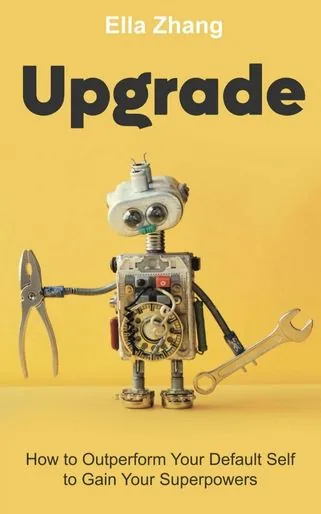
Upgrade is available from Booktopia, Amazon or Ella's website.
You can find Ella at ellazhang.com.au and connect on LinkedIn.
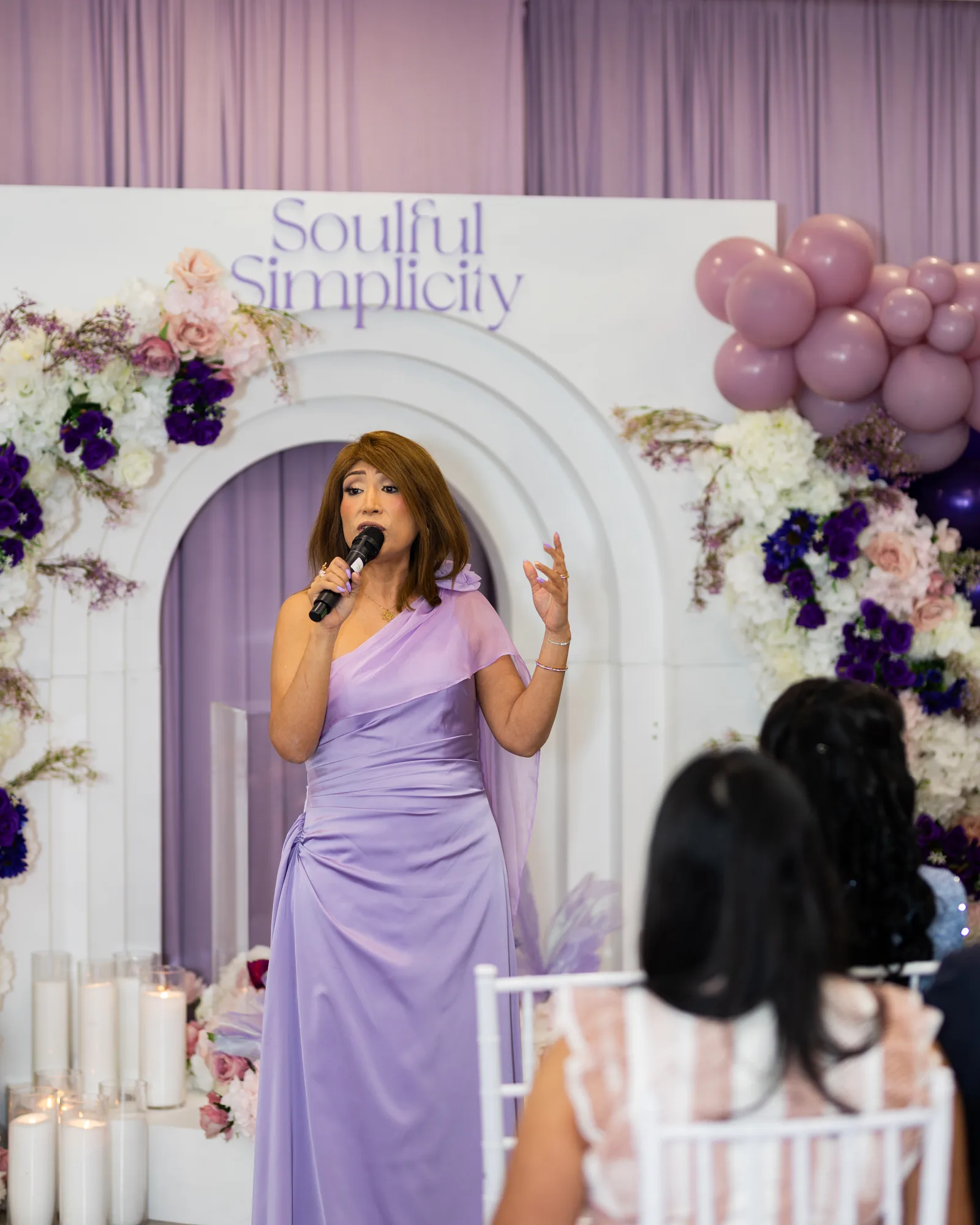
Faye Evans on Soulful Simplicity
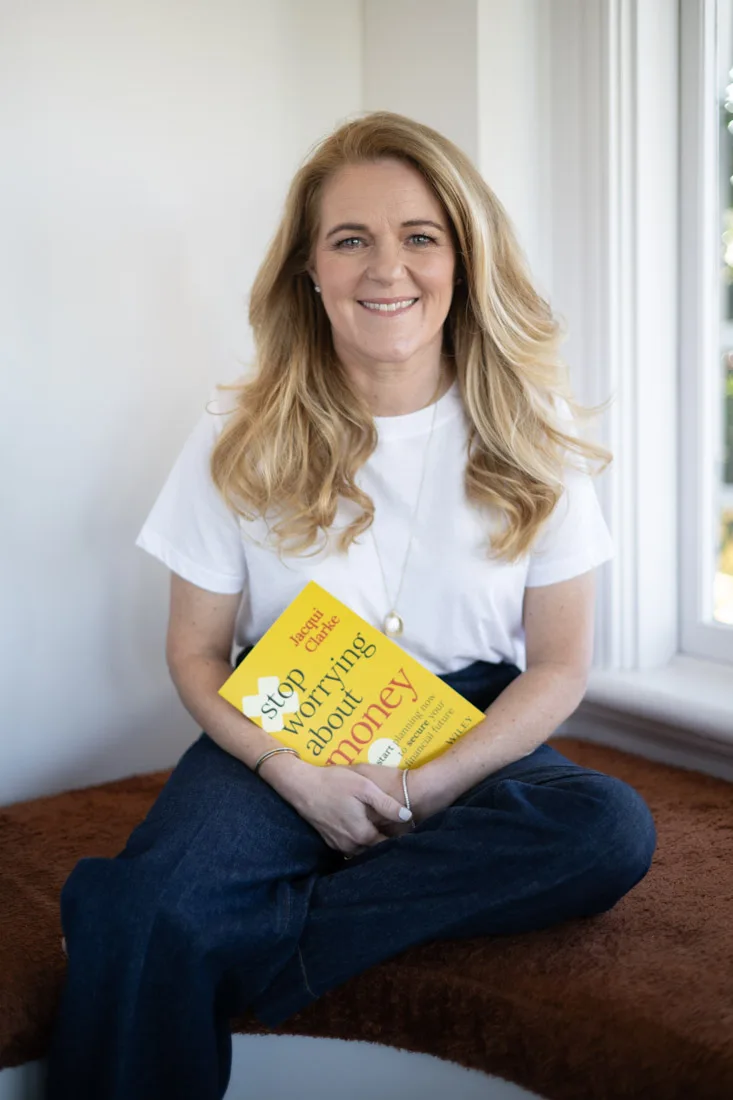
Jacqui Clarke on Stop Worrying about Money

Monique Zytnik on Internal Communication in the Age of Artificial Intelligence