
How our Community Book Launches work
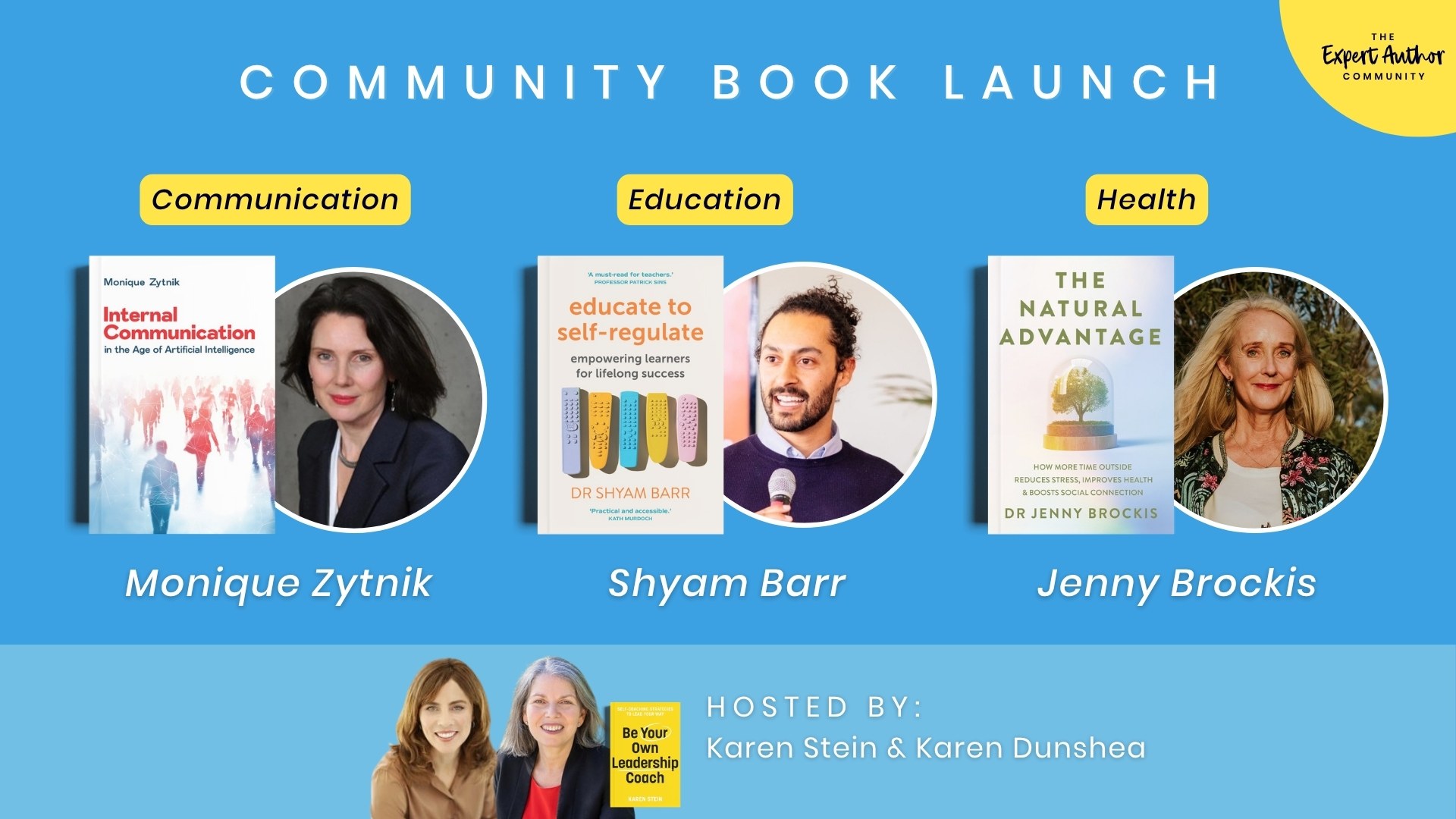
Each Community Book Launch puts three of our newly published authors on a panel, with the doors open to anyone curious about writing a book.
Nobody promotes their own book.
Instead, each author reads a fellow panellist's book and talks about what it gave them. The author answers, and the room listens in on a real conversation between a writer and a reader.
Kelly Irving co-hosted this one with Karen Stein and Karen Dunshea. The books:
- Educate to Self-Regulate by Dr Shyam Barr
- The Natural Advantage by Dr Jenny Brockis
- Internal Communication in the Age of Artificial Intelligence by Monique Zytnik
Watch the full launch
A book that gave a worried parent hope
Educate to Self-Regulate is Shyam's synthesis of his PhD, written for teachers and schools.
Monique read it two ways, as a parent and as a leader. The despair lifted. Then she started marking the tables and prompts she could use with her own team at work.
That double use is the sign of a book that knows exactly who it is for. It was also the hardest thing about writing it.
Kelly had called Shyam out early for writing the book he wanted rather than the one his readers needed.
"I think I was writing the book that I wanted to write as opposed to the book that my audience needed or wanted."
So he chose teachers, then went looking for them. Twenty-one readers went through the manuscript before it reached his publisher, most of them educators still in classrooms. The first three told him it read like a primer to a PhD.
Every round tore it apart, as he put it, in the best possible way. The tables Monique now wants to hand to her children's school did not come from his research. They came from readers telling him what they still could not do after reading it.
A book that changed what its reader actually does
Shyam already believed in time outside. He read The Natural Advantage and caught himself shifting from belief to behaviour.
"Do I value it enough to... action and make it part of my lifestyle? And I found as I was reading your book, because of the evidence that you provided, I just noticed a slight shift."
Jenny, a lifestyle medicine physician, is blunt about why that matters. Her reason for writing was that "we are living shorter lives, we're becoming sicker and sadder".
What made the difference for Shyam was not the argument. It was that the book made the next step small. Her Nature Prescription comes in small, medium and large, from five minutes outside to a weekend, and readers pick their own size.
For a doctor, that restraint is deliberate.
"I try not to be too prescriptive. 'Cause I think as doctors we can get too prescriptive."
Evidence convinces a reader. Permission and a small enough first step are what get them out the door.
A book that made its reader trust the author
Jenny opened her review with a confession. From the title, she had assumed Internal Communication in the Age of Artificial Intelligence was about the conversations we have with ourselves.
She had not known internal communications was a profession at all. By the end she understood why a leader needs one, and, as someone wary of AI, found the examples reassuring rather than alarming.
What won her over, though, was Monique herself, arriving in the small personal details, like the colour-coded wardrobe.
"I'm going to invite you round to my house because I live in a house full of mess and constant clutter."
That is a reader deciding she likes the author. It is also the moment the book's real subject, cutting through clutter, stops being abstract.
Monique's own view of the book is sharper than its title suggests. She wrote it for leaders, not only for communications specialists, because leaders hold the budget and have never been taught to communicate at scale. The AI framing came from her publisher.
"A lot of people get confused by my title... I didn't choose my title, my publisher chose it for me."
She loved the writing and the interviewing. The launch and the marketing that followed were another story, and she was honest that she does not have the energy for another one just yet.
What the three conversations had in common
None of these readers talked about how well the book was written.
They talked about what changed. A parent's despair turned into hope. A researcher felt his own habits shift as he read. A doctor discovered a profession she had never heard of, and trusted the person explaining it.
That is the bar worth writing to. Not what your book covers, but what your reader does differently on the other side of it.
Writing a book of your own? The Expert Author Community is where authors like Monique, Shyam and Jenny plan, write, publish and launch their books alongside each other. See how the community works.

Sarah Gray on It's not you, It's Perimenopause


Salli Cohen on Rollercoaster
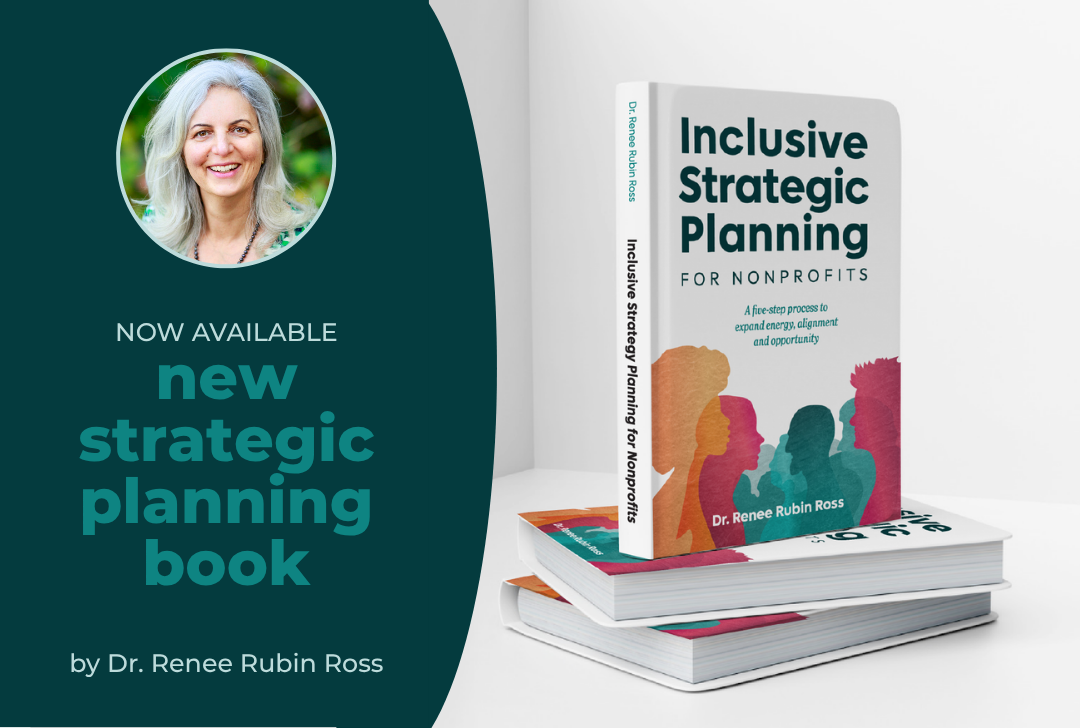
Dr Renee Rubin Ross on Inclusive Strategic Planning for Nonprofits