
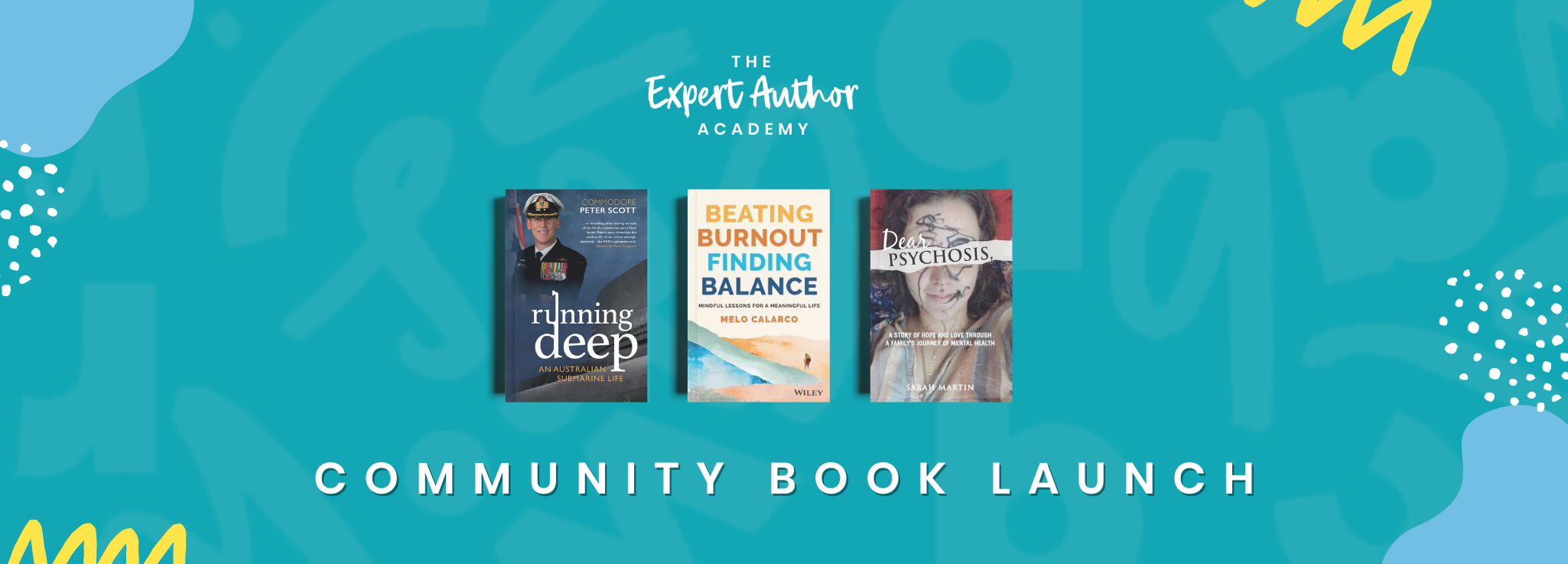
How our Community Book Launches work
Our community book launches are a firm favourite inside the Expert Author Community. We open the doors to friends, family, colleagues and anyone curious about writing a book.
There's one twist.
Rather than talk about their own book, each author reads a fellow panellist's book and shares what they took from it. Then we open it up for questions about planning, writing, publishing and launching.
This session was facilitated by Karen Stein, whose own book was still a few months from the shelf. On the panel:
- Running Deep by Peter Scott
- Beating Burnout, Finding Balance by Melo Calarco
- Dear Psychosis by Sarah Martin
Watch the full launch
Running Deep by Peter Scott
Sarah Martin reviewed Peter's book, and she had an unfair advantage. The two have known each other since Year 10.
Commodore Peter Scott spent his career in the Royal Australian Navy's submarine service. Running Deep covers fires and floods on board dived submarines, commanding the farthest deployment in the service's history, and running the headquarters for Australian forces in Iraq.
Sarah read from page 105, about Perisher, the submarine command course "widely acclaimed as the toughest military command course in the world". It's the kind of course where a Teacher "will frame the question that only I can answer: am I enough?"
Then she read something lighter. Page 86, about the teddy bear his wife sent him as a midshipman:
"I knew instinctively that it was not the done thing for a grown man to take his teddy bear to sea in a warship, but had little choice really. Over the years I learned through a series of tough ransom negotiations that Horatio and I were both better off if his presence on board was not widely known."
What surprised Sarah most was how much of himself Peter let onto the page.
Peter admitted that, one week out from publication, that openness was "scaring the life out of me".
"I've definitely laid a lot of myself out in the book, and I think I've done it judiciously and for good reason. But I don't know how it'll be received."
When Kelly asked whether strangers or people he knew reading it was scarier, he didn't hesitate. "The people I know."
He also named something plenty of first-time memoirists feel:
"I did not start out as an author, and I've had to learn and teach myself how to select and tell the stories in a meaningful, impactful way."
Sarah closed with a fact check. She was there the night Peter met his wife.
"If anyone doesn't believe in love at first sight, they didn't see what I saw."
Beating Burnout, Finding Balance by Melo Calarco
Peter took an unusual approach to reviewing Melo's book. Before he got anywhere near chapter one, he read the packaging.
The title and subtitle. The back cover. The contents page. The references.
"The title, Beating Burnout, Finding Balance. It is brilliant in its simplicity and its clarity, and then the subtitle, Mindful Lessons for a Meaningful Life, just builds really effortlessly on that gripping first headline."
The references alone sold him. "When I flick through the references and I find people like Daniel Goleman, Thich Nhat Hanh, Viktor Frankl, I'm actually going back to get a second copy before I go to check out."
Inside, Peter found a book that "reads with warmth and generosity and optimism", built on Melo's three decades of experience and more than 30,000 km of cycling and trekking across five continents.
The line that stuck with him was on page 110. Two questions for dealing with anxious or negative thoughts:
Is it true? Is it helpful?
Peter called them "so memorable, you almost can't forget it".
Melo, published by Wiley, talked about the tension of writing a book with theory and practices in it while still sounding like himself. His answer was to lead every chapter with a story.
"I could present a whole full-day workshop and I could present a thousand models in those workshops... [but] most people will remember the stories."
He also shared the part of writing nobody enjoys. His draft hit 70,000 words, and 10,000 had to go.
"They call it 'kill your darlings'... and ironically it was actually the chapter which didn't get included in the book, on acceptance. So I had to accept the fact."
Dear Psychosis by Sarah Martin
Dear Psychosis tells the story of Sarah's family living through her adult daughter's psychosis, told through three voices.
Melo reviewed it, and he started with that cover.
"It is a beautifully disturbing image in a way. It's beautiful and it's disturbing at the same time... I think you had a safer option, and I'm glad you didn't go for the safer option."
Sarah chose it on purpose.
"It's one face of mental illness. So it's confronting, chaotic... What it does do is it starts conversation straight away, even if it's 'Oh my God, look at that cover.'"
Melo called the book "heartbreaking and heartwarming at the same time". Drawing on his years working in psychiatric clinics, he said her description of psychosis rang true, and the imagery stayed with him.
"The tentacles of psychosis. Wow, like that was really powerful... the imagery of that is so powerful."
The book moves back and forth in time. Melo normally dislikes flashbacks, but said here they work like putting the pieces of a puzzle together. Sarah hadn't planned it that way.
"Maybe I was looking for explanations myself, by going backwards to figure out the puzzle."
And the title? It nearly wasn't Dear Psychosis at all.
"Originally the book's title was Parallel Lines... and somebody said, 'Well, is there cocaine involved?' And I went, okay, not having that book title anymore."
From rejection to The Project
Sarah's path to publication is one every aspiring author should hear.
She pitched to publishers. One asked for the manuscript and never read it. Another told her it wasn't likely to sell, pointing to her roughly 100 followers on social media.
"I was glad that they called a spade a shovel. Like, I'd rather know than not know."
So she self-published through IngramSpark, guided by guest sessions inside the community.
The week her first copies arrived, her husband mentioned the book to a barista who used to produce The Project. The show emailed her the next day.
As Kelly put it: "She could have really just forgotten about it, but she didn't. She used it as fuel, because she knew that the story had to get out there, and there were other options."
What this panel taught us about writing a book
The fear of being seen fades when readers write back
Every author on this panel had put something personal on the page. Sarah described what that felt like after publication:
"I would wake up in the middle of the night going, my God, have I shared too much? What have I done? Is this the right thing to do?... When I got the first feedback from some random person from my website that emailed me, and now I've probably got 50 emails... it is all worthwhile."
Melo put it more bluntly: "People connect with people, like that's the simple equation. And otherwise, you can get ChatGPT to write your book for you."
Your cover and front matter are doing the selling
Peter's review showed how much a reader decides before page one. Traditional publishing also meant Peter didn't get the final say on his cover... and the first version featured an Indonesian submarine.
"Every other bloody submariner in Australia would go, 'Yeah, what's that doing on the cover of the book?'"
That one got changed.
Writing about real people takes care
Peter checked passages with his family before they went in, and offered the manuscript to the Navy, who wouldn't endorse it but wouldn't block it either. His publisher also pointed out he'd written in more than 100 characters.
"She said, 'You've got over a hundred characters in this book. It'll just confuse people.' And I said, 'Over a hundred?' She said, 'That's when I stopped counting.'"
Sarah made sure her daughter was 100 per cent on board before anything went to print.
Nobody gets there alone
Sarah's writing buddy Melissa, one of her Focus Friends inside the community, joined the call and described her role as "the midwife to the birth of this book".
"From the very first perfectly formed baby manuscript, I just said, this is a cracking yarn."
Sarah didn't soften it: "If I didn't have Kelly and the gang here, it would not have gone anywhere."
Is it true? Is it helpful?
Kelly closed the session by coming back to Melo's two questions.
They're a good filter for the doubts that show up while you're writing. Is the story true? Is sharing it helpful to the person reading?
If the answer to both is yes, it probably belongs in the book.
Writing a book of your own? The Expert Author Community is where authors like Peter, Melo and Sarah plan, write, publish and launch their books alongside each other. See how the community works.
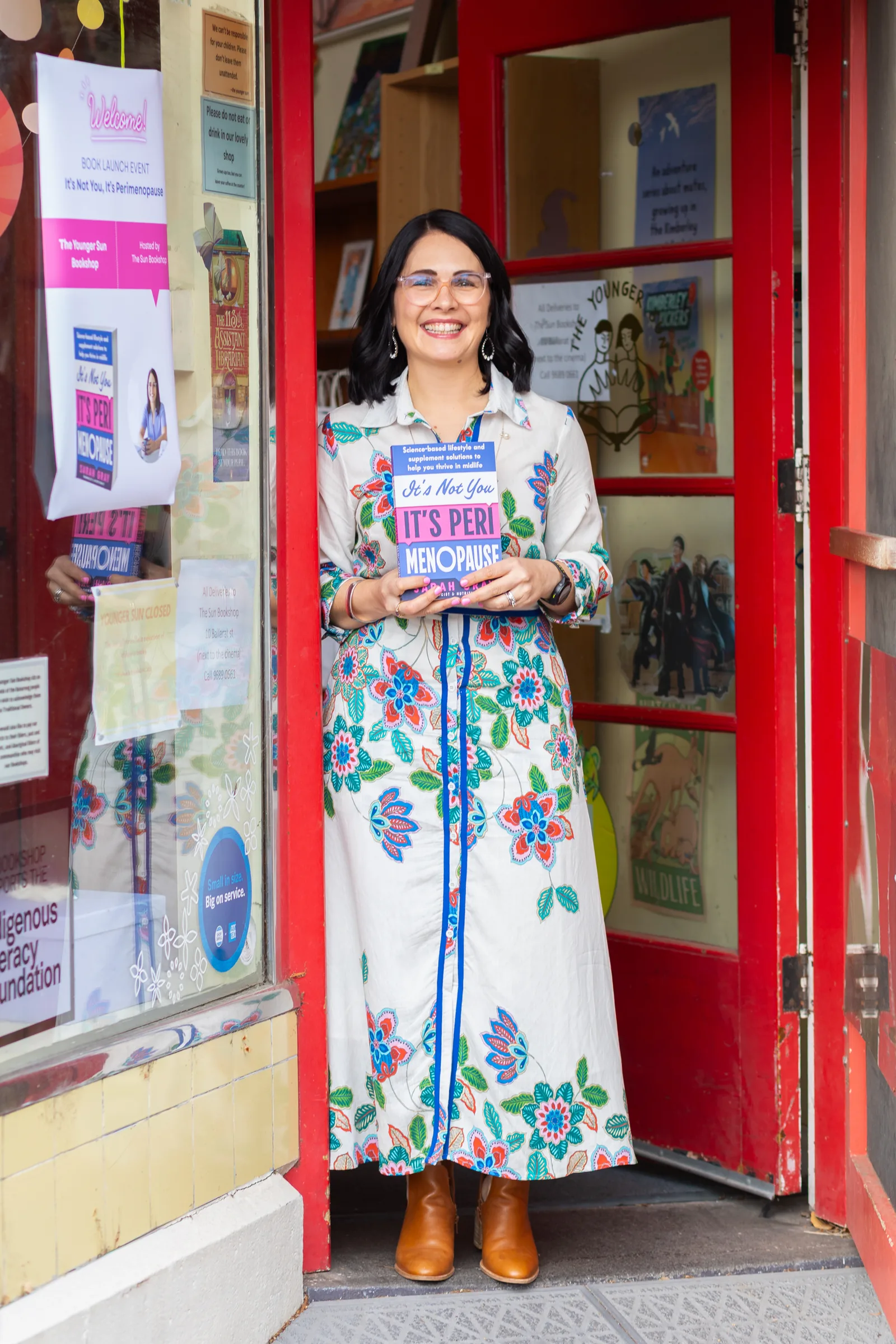
Sarah Gray on It's not you, It's Perimenopause
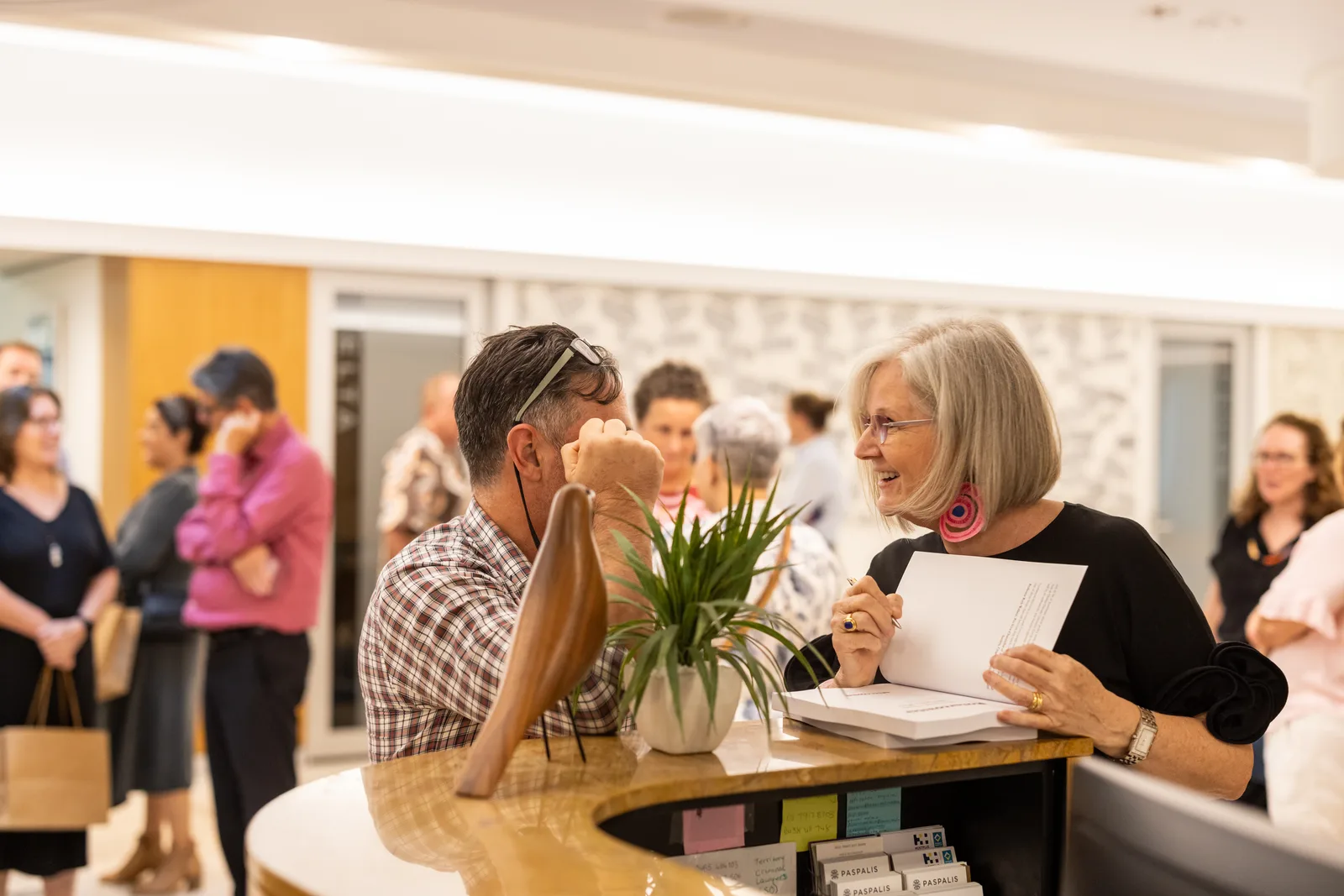
Salli Cohen on Rollercoaster
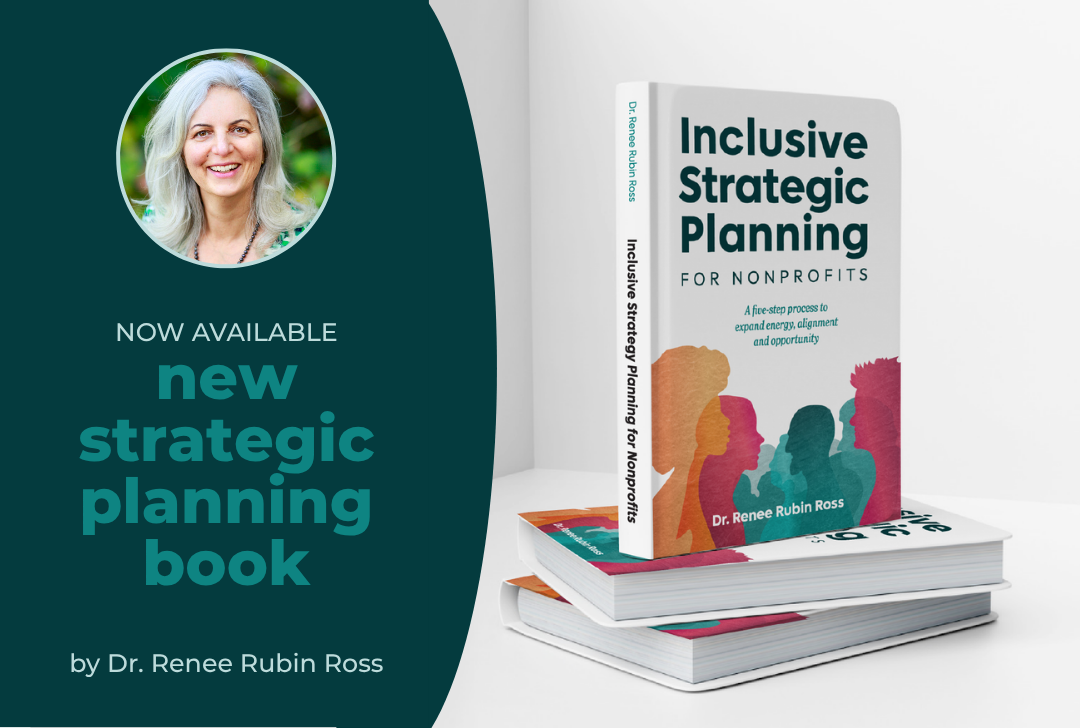
Dr Renee Rubin Ross on Inclusive Strategic Planning for Nonprofits