
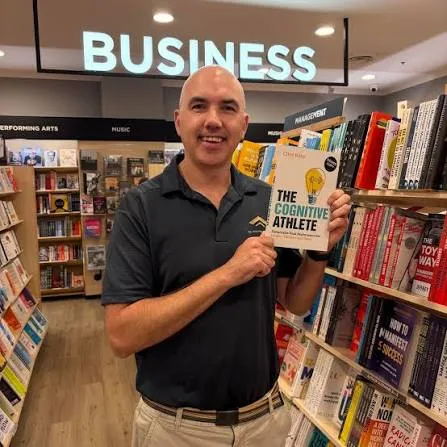
Clint Rahe breaks cognitive performance into conditioning, transition, performance and recovery, and says transition, the deliberate shift from one state into the next, was the hardest phase to pin down on the page. He also explains why he counts recovery in five-minute gaps rather than weeks off, and why he has stopped trying to convince leaders who say they are too busy for any of it.
The athlete metaphor gets used loosely in leadership writing. What does treating cognition as genuinely trainable demand of a leader that the metaphor usually glosses over?
For me, the big difference is that if you genuinely treat yourself as a cognitive athlete, you have to accept that performance isn’t just about trying harder.
We understand that intuitively in sport. An athlete wouldn’t expect to compete at their best every day, all year round, with no training cycle, no preparation and no recovery. Yet that’s almost exactly what we ask knowledge workers and leaders to do.
We fill every gap in the calendar, jump from meeting to meeting, respond to messages all day and then wonder why our decision-making deteriorates or why we’re exhausted by the end of the week.
Treating cognition as trainable means being much more deliberate about how you prepare to perform. You have to think about when you do your best thinking, what you expose your brain to, how you transition between different types of work and how you recover afterwards.
It also means accepting that pressure doesn’t suddenly create performance. It tends to reveal the preparation you’ve done beforehand.
That’s probably the bit the metaphor often skips. Calling yourself a cognitive athlete sounds good. Training like one requires choices about your calendar, your boundaries and sometimes saying no to things that look productive but aren’t helping you perform.
Your system breaks performance into four phases: conditioning, transition, performance and recovery. Which of those did you find hardest to pin down on the page, and did writing it change how you now teach it?
Transition was probably the hardest to articulate.
Conditioning makes intuitive sense. Performance makes sense. Recovery makes sense, even if people don’t always do it.
Transition is less obvious.
It’s the space between preparing and actually performing. How do you move from one state into another deliberately rather than carrying whatever happened five minutes ago into the next important conversation, meeting or decision?
I knew it mattered because I’d experienced it throughout my career, particularly in the military and in facilitation. You can prepare incredibly well, but you still need a way of getting yourself into the right state when it counts.
Writing the book forced me to make that much clearer.
I probably teach it more practically now. It doesn’t need to be some elaborate routine. Sometimes transition is thirty seconds before a difficult conversation. Sometimes it’s a walk before you go on stage. It could be music, breathing, reviewing your intention or simply closing one piece of work before opening another.
I’ve become much more interested in those little moments between activities because that’s often where performance gets lost.
You draw on elite sport, military practice and cognitive science, three fields that don't always agree. Where did you have to make a judgement call in the book because the evidence was thinner or more contested than you'd assumed going in?
Interestingly, I haven’t always seen sport and the military as being that far apart. There is a lot of crossover, particularly around periodisation, preparation, performance and recovery. During my time in the military we also worked closely with elite sporting teams, so I’ve seen those worlds complement each other rather than compete.
Where I’ve had to trust my judgement is when I’ve seen and experienced something working before the research has fully caught up.
I’ve been involved in recovery and decompression programs in the military. I’ve worked with athletes in that transition phase, deliberately changing their state before they perform. I’ve experienced the same thing myself before skiing, before live-firing exercises and now in the moments before I walk on stage to speak.
You can physically see and feel the change in state.
Then sometimes, five or ten years later, the research starts giving language and evidence to something we were already doing because we could see the impact in front of us.
That happened a number of times while I was developing the ideas behind The Cognitive Athlete.
So there were moments in writing the book where I had to trust a combination of the available evidence, more than twenty years of experience and what I had repeatedly observed in real performance environments.
That’s not about ignoring the science. Quite the opposite. I want the science.
But I’ve also learned that practice doesn’t always wait for the research paper to be published. Sometimes practitioners are seeing a pattern long before we completely understand why it works.
For me, the judgement call was being comfortable saying: this is what I have seen, this is what I have experienced, this is what the evidence currently tells us and being clear about the difference between those things.
Recovery tends to be the phase ambitious professionals quietly skip. After writing a whole book about it, how do you make the case to a leader who is performing well right now and sees no reason to change anything?
I think the first thing is to reframe recovery.
It doesn’t have to mean taking a week off or disappearing on holiday. Recovery can be five minutes between meetings, an early finish after a demanding week, a later start the next morning, a walk, better sleep or simply creating some space where your brain isn’t constantly being asked to perform.
The challenge is that something can be working today while still creating a cost further down the track. You can push hard for years and feel like you’re getting away with it, but eventually the body starts sending you the bill.
I’ve also learned I can’t change people. If somebody genuinely believes their current way of working is fine, it isn’t my job to convince them otherwise. I can influence them, share what I’ve seen and be there when they’re ready.
And I probably come at it from a different lens now. At the end of your life, I doubt many people are thinking, “I wish I’d spent more time at work.”
That doesn’t mean ambition is wrong or that we shouldn’t work hard. I love what I do. The goal is to perform well for longer, while still having something left for the rest of your life.
Now that people are reading the book rather than sitting in a room with you, what part of the argument is landing differently than it does in a live session, and has anything drawn pushback you didn't expect?
The biggest pushback has probably come from people who are already extremely busy.
The response is usually some version of, “That sounds great, but it wouldn’t work for me,” or, “You don’t understand how busy my role is.”
Earlier on, I probably felt more compelled to challenge that or convince them otherwise.
I’ve learned not to.
Some people simply aren’t ready to change the way they work yet, and that’s okay.
Ironically, they’re often the people who would benefit most from some of the strategies in the book. If your immediate reaction to protecting thinking time, creating better boundaries or building recovery into your week is, “I’m far too busy for that,” there’s probably something worth examining there.
But I’ve realised it isn’t my job to convince everybody.
I can share the ideas, challenge the assumptions and hopefully influence how people think about performance. Then I can be there when they are ready to make a change.
That has probably been one of my own lessons from the book as well. Good ideas don’t always land when you want them to. Sometimes people need to experience the cost of their current way of working before they become open to doing something differently.
You spent a long stretch writing about focus and sustainable output while producing a book, which is its own endurance test. What did your own process teach you that you'd pass on to someone about to start theirs?
Probably the biggest lesson is that writing the book is only one part of writing a book.
I went into it thinking a lot about the manuscript, getting the ideas out of my head, structuring them and making the argument clear.
What I understand much better now is that publication isn’t the finish line. It’s the starting point.
The publisher can do a great job getting the book distributed and onto shelves, but as the author, it’s your job to keep creating the buzz around the ideas. You have to keep talking about the book, doing interviews, speaking, creating content and finding different ways to put the message in front of people.
You’ll get tired of your message long before most people have even heard it once.
In hindsight, I probably would have budgeted more specifically for that phase, potentially including a publicist.
I also don’t look at the success of the book in terms of launch week anymore. I see it as a three-to-five-year project.
So my advice would be: don’t just plan to write and publish the book. Plan for what happens next.
The book gives the idea somewhere to live. Publication is really just the starting point for getting it out into the world.
How has your thinking changed since the book was published?
When the book came out, I probably thought I had the message 100% nailed.
Looking back, it was probably closer to 80%.
Every keynote, podcast interview, workshop and conversation since then has helped me sharpen it. I’ve become much clearer about what I want people to actually take away and do.
For me now, it’s less about people simply understanding the four phases of the Cognitive Athlete and more about making periodisation practical helping people think differently about how they prepare, transition, perform and recover across their day, week and year.
That’s been one of the biggest surprises.
I thought the book would be the finished version of the idea. In reality, publishing it gave me more opportunities to test the message, explain it, challenge it and see what actually resonates.
The book gave the idea structure. The conversations since have made it sharper.
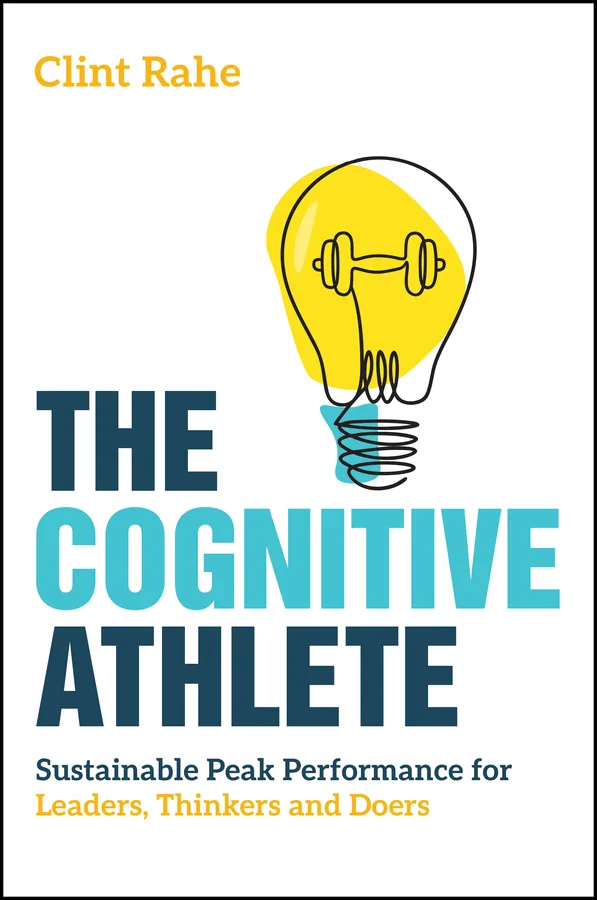
The Cognitive Athlete: Sustainable Peak Performance for Leaders, Thinkers, and Doers
You can find Clint at thecognitiveathlete.com.au and connect on LinkedIn.
TyAnn Osborn on A Life Aligned

Graeme Cowan on Great Leaders Care: Developing Safe, Resilient and Successful Teams

Jo Muirhead on The Entrepreneurial Clinician