
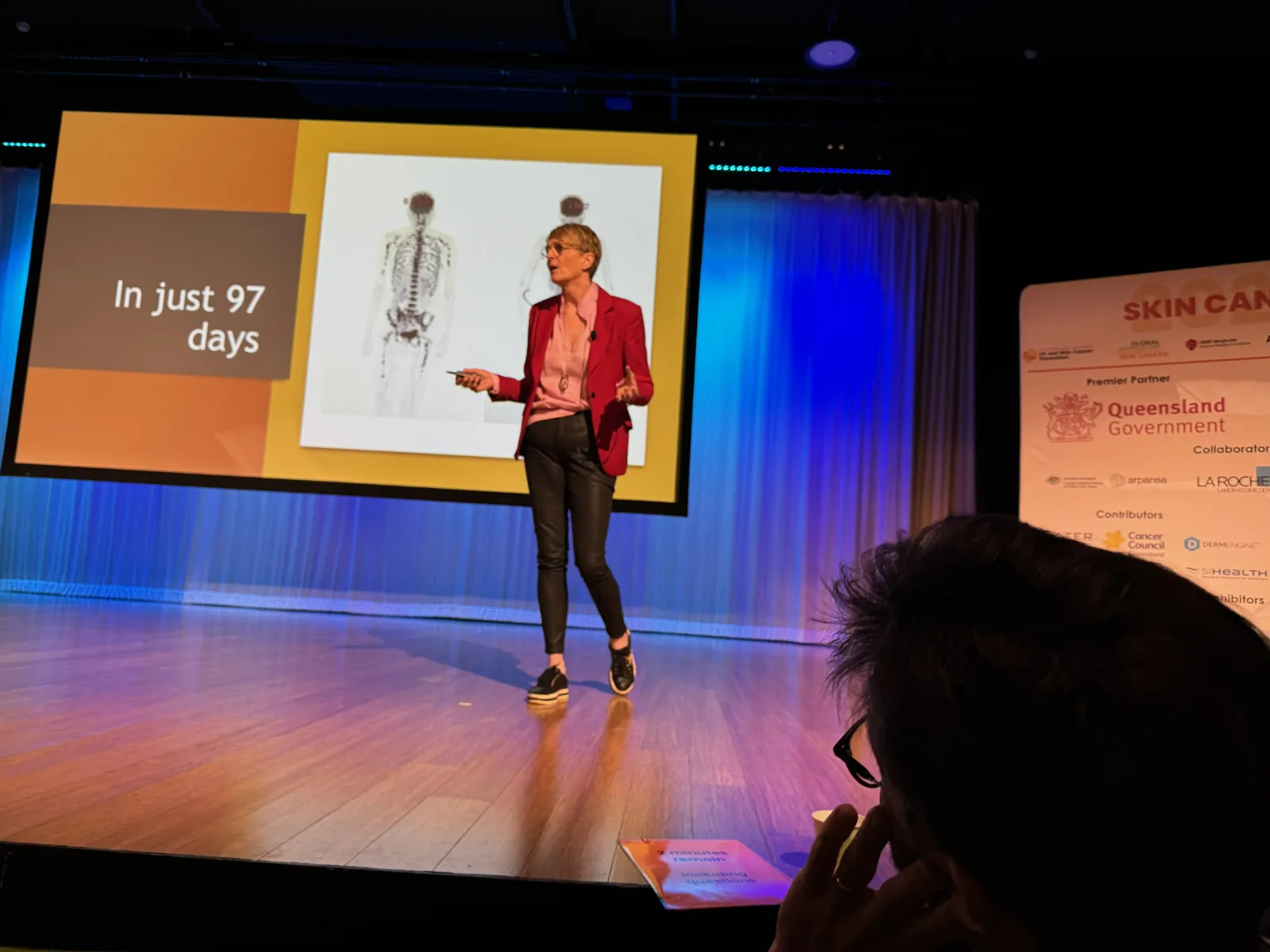
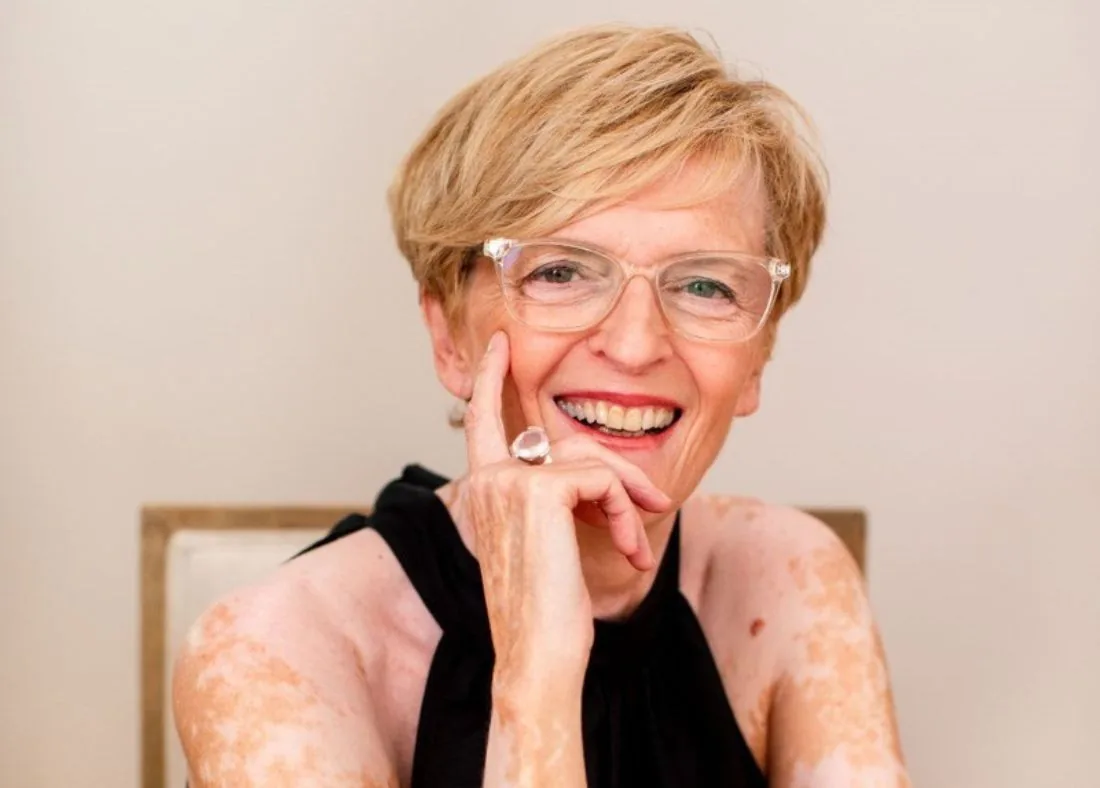
Anne Gately's Sunburnt sets her Stage IV melanoma diagnosis alongside peer-reviewed research on tanning and the history of Australian sun culture. She talks about why readers who start with her personal story end up discussing school sports carnivals and sun protection policy, and why she now argues skin cancer needs a systems response rather than individual willpower.
Sunburnt sits in an unusual place, part memoir of a Stage IV melanoma diagnosis, part investigation into why Australians worship the sun. Now that the book has been out in the world a while, which of those two halves do readers actually want to talk to you about, and has that surprised you?
Personal story is always where people start - reflections on my story or sharing their own. But interestingly they shift fairly quickly to the structural issues which have impacted their story e.g. schools not having sun protection strategies for events and their children coming home sunburnt from sports carnivals etc etc. Happily, what I've realised is that by providing the data and research in my book it has helped people to understand the problem on a different scale, they don't usually refer to structural or system issues but that is what they have started to recognise and think about. I think it has enabled them to shift their thinking from just themselves to the wider community.
You made the structural decision to include not only the story of your childhood along with your melanoma diagnosis but peer-reviewed research on tanning behaviour and the history of Australia's social norms. Looking back, what did that structure let you say that a straight memoir or a straight public health book could not?
By including the research I wanted to elevate the story from that of an individual to one of the collective. I wanted to illustrate that my story could be the story of any average Aussie. I didn't want the story to be about another 'fight' with cancer, I wanted to draw attention to the structural issues that impacted my own sun exposure. By telling my story alongside the research it showed the real impacts and consequences of what the research is telling us. Without my story, the research doesn't feel personal or have the same emotional response - without the research, it wouldn't have drawn attention to the larger issue.
Your central argument is that personal responsibility alone will never bring skin cancer rates down, that it is a WE problem rather than a ME problem. Has your thinking on that hardened, softened or moved somewhere else entirely since you finished writing?
My view on this has only become stronger. Skin cancer needs an integrated system approach if we are to significantly reduce its impact on Aussies. It was only after I'd written the book that I did further research on systems thinking which only served to reinforce my view of what is needed.
What do you understand now about why younger Australians still tan and burn that you did not understand when you were doing the research for Sunburnt?
This is a really complex question and the research I found when I was writing the book is still valid. Tanning in young people is tied to their self-esteem, the need to belong and the endorphins that being in the sun can provide. It can be influenced by family, culture and peer groups.
Technology is the medium by which most of this influence is delivered, especially via social media, and it is this which is constantly changing and unfortunately easily scalable. It just takes one influencer to post about a new 'tanning strategy' and it can spread across the world immediately. Combatting this is difficult, education as well as helping to build young people's self esteem outside of their body image is key.
Writing about your own body and a dire prognosis means deciding what to put on the page and what to keep. Is there anything you held back, or included, that you judge differently with a few years' distance?
I didn't hold back - for instance, one of my chapters is entitled 'Pain, poo and other things'! I felt I needed to lay it all bare (like on the cover) so people would understand just how dire my diagnosis was and how difficult the journey got. I also wanted to be honest in the case that others with melanoma read my story, to both prepare them for what may be ahead and also provide hope.
There were some things I included that I thought may have been 'too much information' and that perhaps I'd feel awkward about once people had read it - in the end it was actually felt quite freeing. I've only had one person say to me that he feels like he knows me far too intimately after reading the book!
You now speak to workplaces, sit on skin cancer prevention and screening committees, and get called on by the media. What has having the book behind you made possible in that advocacy work that your story alone would not have?
Having written the book has given me more credibility and increased awareness of my message. Scientists and researchers are heavily involved in the skin cancer advocacy space so I think being a published author makes them more comfortable with what I have to say.
Because of my career history in advertising my main advocacy interest lies in impacting our culture through a change in advertising regulation, I had spoken on this topic prior to writing my book but I've found that after the book I get invited into conversations that I may not have otherwise. As a result I have gained support and input from a number of organisations and individuals who have worked with me to make a collective submission to the Australian Association of National Advertiser's Code of Ethics review. As at October 2026 we are still waiting with hope on a positive result.
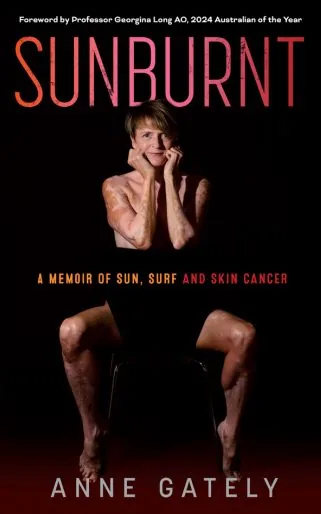
Sunburnt is available from Booktopia, Amazon or Anne's website.
You can find Anne at annegately.com.au and connect on LinkedIn.
TyAnn Osborn on A Life Aligned
Graeme Cowan on Great Leaders Care: Developing Safe, Resilient and Successful Teams
Jo Muirhead on The Entrepreneurial Clinician